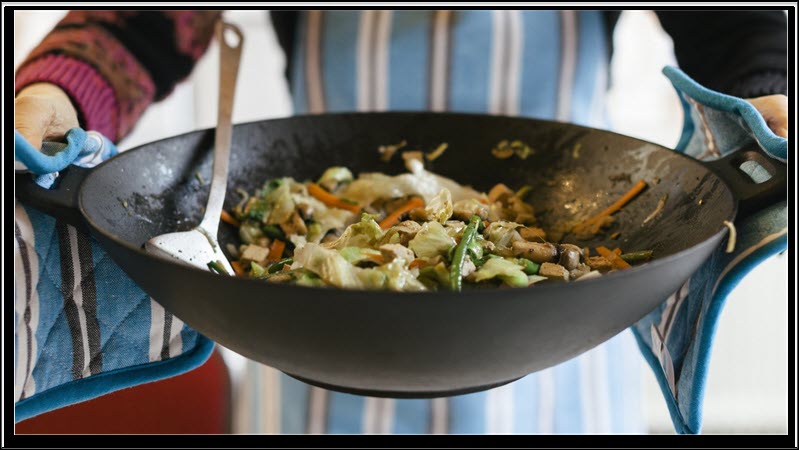
A Wok is a cooking pot that is deep and round bottomed. A cooking pot that originates in China since most of the Chinese dishes requires a wok when cooking Chinese foods such as fried rice and or stir fry dishes or for other Asian cooking. Basically, any Chinese dish that needs deep frying requires a wok pot. To create a non-stick surface to your wok, you may need to season the wok. In today’s guide, let us talk about the steps on how to season a wok.
How To Season A Wok
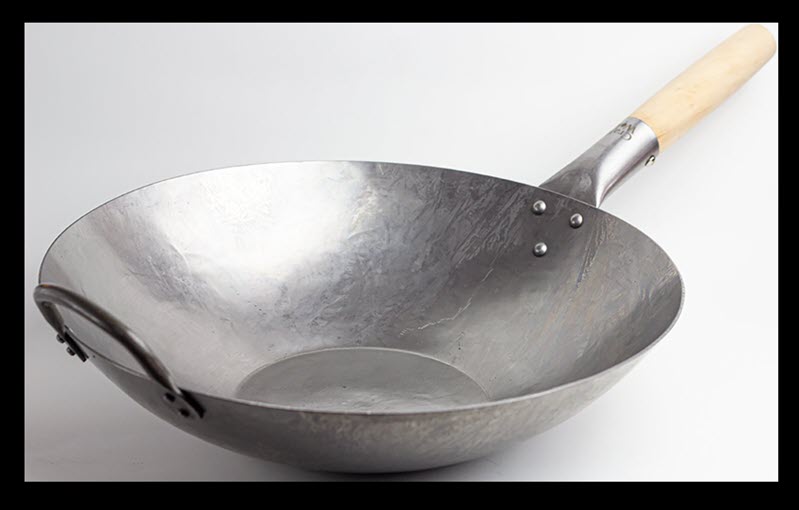
Most of the Woks have wooden handles. The handles will help to hold the pan and move it quickly and easily especially when tossing the ingredients used in cooking. The most common types of Wok are cast iron wok and the carbon steel wok, although there are other types such as aluminum wok and stainless steel woks that has a non-stick surface. For woks with a naturally non-stick surface, there’s no need for you to do season the wok.
Why do you need to Season a wok?
The purpose of seasoning a wok is to make a non stick surface of your work to wok that do not have non stick coatings. Carbon steel woks and Cast iron skillets needs to go through the seasoning process to create what they call a Patina, it will help protect the inner portion of the cooking pan. Aside from that, wok seasoning prevents the pan from getting rusty and free from corrosion.
As mentioned, carbon steel wok requires seasoning for that non stick wok patina. Basic carbon steel wok are usually sized 14 to 16 inches in diameter and is usually made of 14 to 16 gauge steel. The 14 gauge steel is about 2 mm thick while the 16-gauge steel wok is about 1.6mm thick.
There are different models carbon steel woks but the most common type are the ones with two wooden handles on both sides. On one side is a long wooden handle while a wooden helper handle is on the other side. Since there are two handles on either side it would be easier for you to lift the work using both your hands gripping each of the handles.
Listed below are the steps on how to season a wok. To use the wok for the very first time, it will require seasoning before you use it for cooking.
Steps on how to season a wok:
Clean the Wok
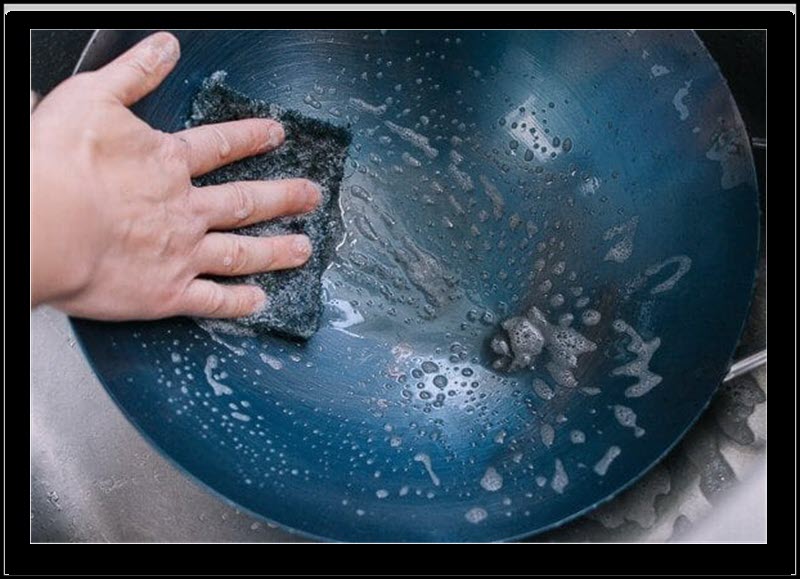
The very first thing that you need to do before you season a brand new wok is to clean it first. Most of the wok have cleaning instructions from its manufacturer. There are also other woks that are dishwasher safe but for new carbon steel wok you may need to wash it first with dish soap and water. Washing with soap and water helps removes factory oil and residues on the wok. You don’t want your food to be exposed to factory oil with your new wok.
When cleaning the wok, you will be needing a dish soap and a metal scrubber. A scouring pad will do too. Although, other soap and abrasive scrubbers can also be used too but only for preparing the wok. It should not be used on a regular basis (cleaning and maintaining) of the wok as can somehow remove the non stick surface or the Patina.
To clean the wok, first add dish soap to the wok. Then using the scrubber, scrub the inside first and then scrub the outside of the work. Rinse thoroughly after scrubbing. Then repeat the same process again at least 2 or 3 times or until you will no longer see black stains on your fingers after rinsing.
Make sure to pay extra attention to the area where the “Made In” and also where the bolds are the holding the handle, it is difficult to clean in that area.
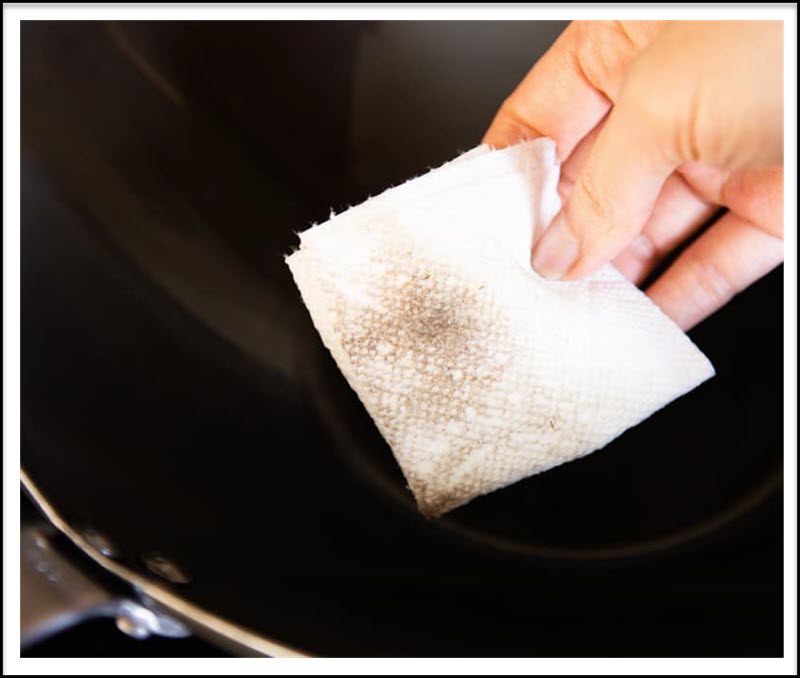
Next, using a paper towel gently wipe the inside surface as well as the outside surface of the wok. Paper towels can also help in removing factory oils that were not removed during the cleaning and scrubbing process. If there are black residues seen on the paper towel, repeat the washing and scrubbing of the wok again and then with the paper towel. Do that until the there is a clean wipe on the paper towel, that means factory oil has already been removed from the wok.
Dry and Pre Heat the Wok
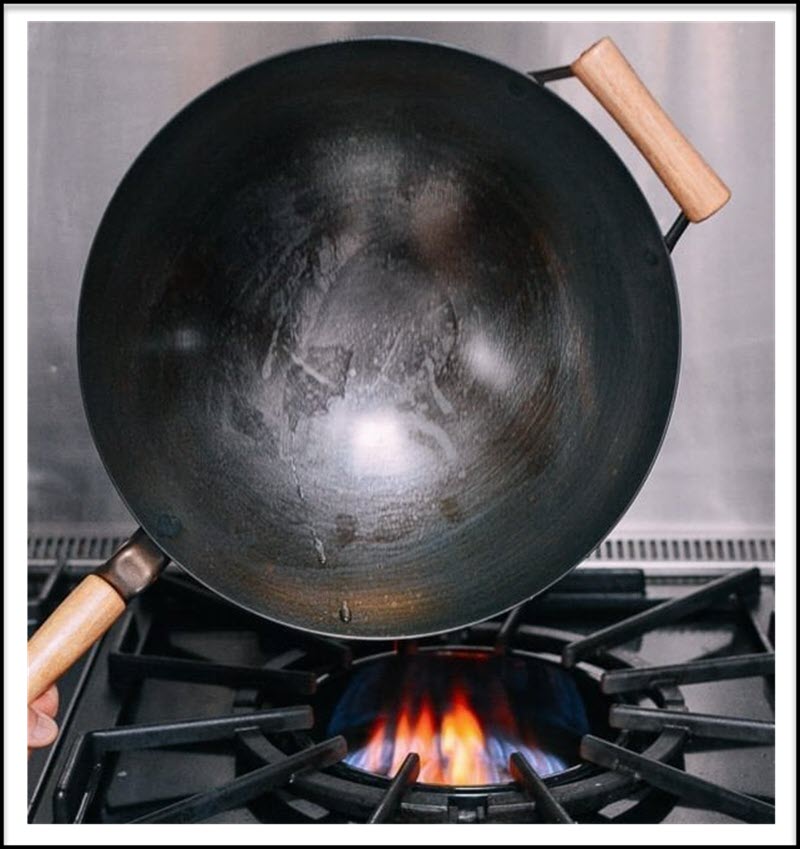
Place the cleaned wok on the gas stove on high heat. Since the water evaporates because of the flame, there is no need to towel dry the wok. To prevent the long wok handles on your new wok from burning, you can wrap it with aluminum foil.
Once the all the water evaporates from the wok, wet your fingers and then whisk some water to the wok. When the wok hiss and the water automatically evaporates you will then know that the wok is already hot enough.
Heating of the wok will typically create a smoke therefore make sure you have enough exhaust to remove the fumes inside your kitchen.
While wok is on the gas stove over high heat, make sure to move the wok around the flame. This is to ensure that all the areas of the wok will be hit by the flame and not just hitting the bottom. Heating of the wok should be even on all sides.
Seasoned Wok
The main purpose for this step is to create and open up the wok’s pores. This will allow easy absorption of the oil that will prevent the wok from rusting and will begin to create a nonstick surface.
Since cooking oil will be involved in this process, make sure to turn on exhaust fan or open the windows for proper ventilation and to remove fumes. Use oil that withstand high temperatures. High heat temperatures means temperatures of 450 degrees or higher (high smoke point ). Add a thin layer of Cooking oils such as canola oil, peanut oil, grapeseed oil and vegetable oil.
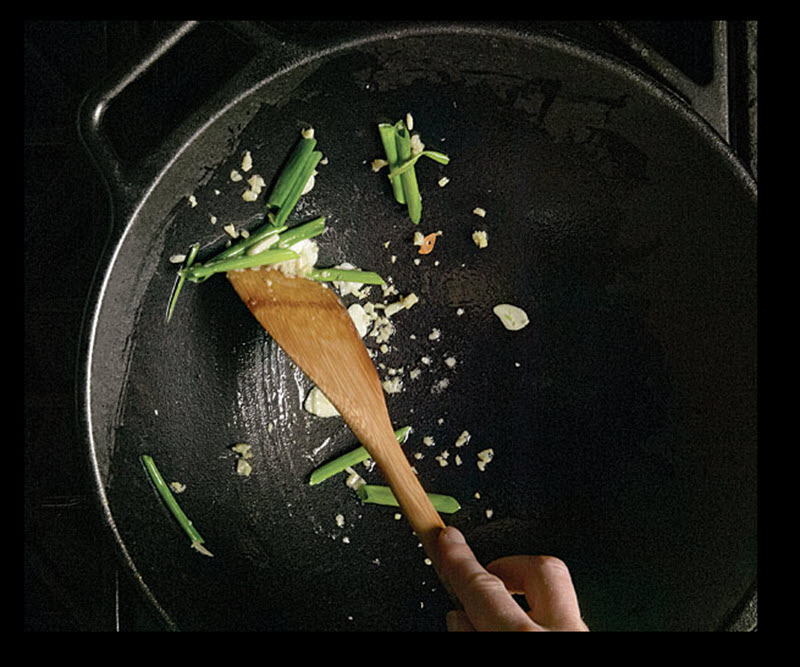
First, add oil (at least 2 tbsp. ) in the wok. Make sure to lower the heat to medium heat. Add ginger, Sliced scallions and garlic. Stir fry the vegetables that we’re added. To help evenly spread the oil to the entire inner surface of the work, press the back portion of the spatula that you are using to stir fry. Continue to stir fry and spread the oil using the wok spatula for at least 15 minutes. Creating the Patina usually takes time.
When the wok is exposed to flame, Most of the carbon steel wok usually change its color if you notice it especially in the area where the “Made In” is located. The change is usually from color grey and then turns to blue. It is a perfectly normal changes to the wok.
After stir frying the vegetables for 15 minutes. turn off the heat of the gas stove and allow the newly seasoned wok cool down.
Cleaning the Wok
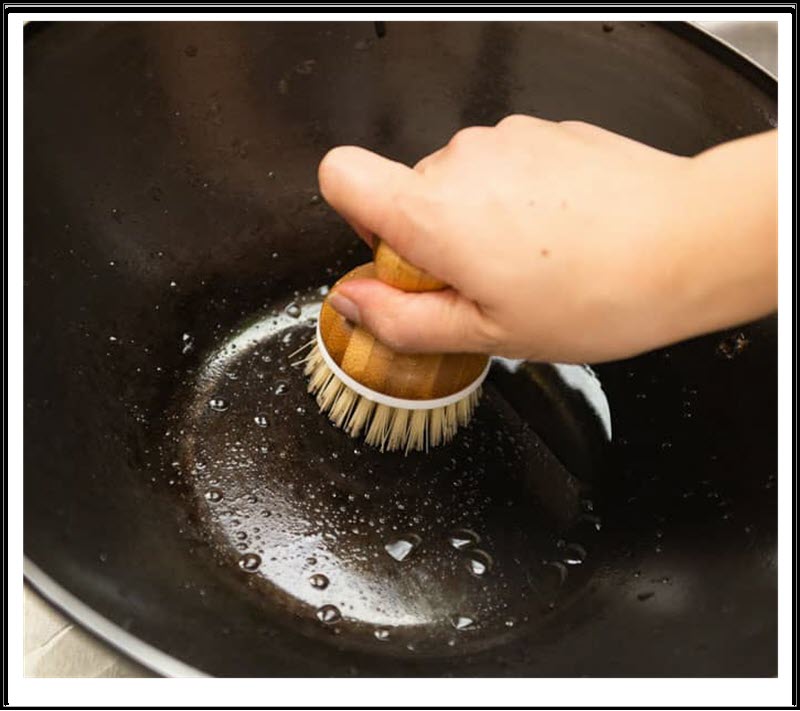
After the seasoning process of the work, next is to clean the wok. It is normal for the wok’s surface to have grease on its inner surface. To clean it, use only a soft sponge and do not use dish soap.
Simply rinse the wok and dry wok thoroughly or you can place the wok back to the gas stove, this will help remove remaining water particles from rinsing.
For a stronger protective coating of your wok, you can actually repeat the steps mentioned above on how to season a wok.
You can also towel dry the work, reheat the oiled wok again and once cool enough you can wipe the entire wok using a paper towel and also by adding a few drops of vegetable oil.
How to care and maintained a Seasoned Wok
After seasoning a wok, all you need to do now is to know how to take care and maintain its non stick surface. In caring for a cast iron wok or a carbon steel woks, follow these important tips:
- Regularly use the wok- there are a lot of stir fry recipes and other dishes that requires a deep cooking pot, thereby a wok is all you need. Regularly using the wok helps in re-seasoning the wok when oil and added and heated in the wok.
- Make sure Wok is thoroughly dry after rinsing- it is recommended to dry the work completely by using a clean and dry kitchen towel. You can also put the wok on the gas stove that is on medium high heat or high heat because as mentioned earlier heat helps to evaporate the water on the wok to dry it.
- Do not use soap – for a seasoned wok, it is advisable not to use dish soap or other soap materials as it will remove the patina on the wok.
- Use Soft sponge- there are unavoidable times wherein food stuck to your wok, to remove it you can simply place the wok in a boiling water for a few minutes then remove the wok to soften the stucked food. Use a soft sponge to remove it. Do not use scouring pads or steel scrubbers to clean the wok as it will scratch the wok’s surface and breaks the patina and seasonings. Aside from that, you can alternatively fill the wok with 4 to 5 cups of water and bring the water to boil for about 5 minutes to help loosen the foods that gets stucked.
- Use a cooking tools idea for wok- there are cooking utensils that should only be used when cooking using in your wok. Kitchen tools other than metal utensils because metal utensils can scratch and break the patina. Therefore it is recommended to use a wooden kitchen utensils instead since it does not have sharp edge and cannot damage or break the patina or seasoning build up. Specific tools that are used when using Wok includes a wok spatula and a ladle.
Frequently asked questions
A wok that has already been seasoned will now be ready for cooking. If the newly seasoned wok has some blackened or mottled areas, this is perfectly normal. Patina will typically darken the more you use your wok for cooking.
No, you only need to season the new wok the first time you use it or when the cast iron wok or carbon steel woks are still new.
After seasoning the wok and with continued use, the patina will eventually develop that could create a nonstick surface of your wok.
You can season a wok at least 3 times if you are aiming for a more thicker and stronger protective coating of your wok’s surface.
You cannot use just any type of oil to season a wok, there are specific oil that you can use such as soybean oil. grapeseed oil, peanut oil, vegetable oil, canola oil, flaxseed oil and avocado oil.
It is recommended to do the oiling and the heating process of the pan at least three times to ensure seasoning the pan completely.
Conclusion
Seasoned a wok is of utmost importance to any new wok. This will create a non stick surface as well as prevent corrosions and rust therefore wok will definitely last for a longer period of time especially when maintained very well.
If at some point the wok starts to rust. you can gently scrub the rust off using a scouring pad. Clean and rinse the wok.
We hope that this guide will give you an idea on how to season a wok, especially the newly purchased wok. So that your wok will be rust free, corrosion free and will have a non stick surface.