Vietnamese Condiments (from Chapter One of Authentic
Vietnamese Cooking)
By Corinne Trang
Condiments are an integral part of nearly every Vietnamese dish. The
cuisine assumes that they necessarily complete an item rather than
optionally enhance it. Complex in flavors and well balanced in terms of
sweet and savory as well as texture, they are never used to mask an
ingredient. Suffice it to say that a Vietnamese table without its array of
condiments is a table that has not yet been fully set.
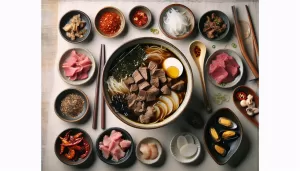
There are four basic groupings of condiments: dipping sauces, pickles,
flavorings, and garnishes. Many incorporate the most important — in fact,
defining — Vietnamese dipping sauce and seasoning, nuoc mam, or
fish sauce. The best version is made on the island of Phu Quoc in the Gulf
of Thailand in the South. It is made of a silvery, almost translucent type
of anchovy called ca com. These anchovies are layered, salted, and
left to ferment for months in wooden barrels. The first "juice" extraction
happens after the first three months of fermentation, and it is poured
back into the barrel on top of the layered anchovies. After another six
months, the juices are extracted again, and it is this extraction that is
considered the "first pressing," which is also the best quality. It is
used plain, as a seasoning for the table, or as a base in dipping sauces.
The second and third pressings, which follow, are weaker and are used for
everyday cooking, in stir-fries and stews, for example. Fish sauce is to
the Vietnamese what salt is to Westerners and soy sauce is to the Chinese.
It is an integral part of the cuisine, for without it, a meal would not be
considered a meal.
Vietnam's varied dipping sauces are important in all of its cuisines,
and the most important of all is the indispensable nuoc mam cham
(most often referred to as nuoc
cham), fermented fish sauce diluted with lime juice, distilled
white rice vinegar, sugar, fresh chilies, and garlic. It accompanies many,
if not most, dishes, from the most elaborate meat and fish preparations to
the most humble bowl of plain steamed rice. At home it is almost always on
the table, and we often make batches large enough to last a few days.
Other dipping sauces are often equally interesting but are commonly
served as an accompaniment to specific dishes. For example nuoc
leo, peanut sauce is served with nem nuong, grilled pork
meatballs, or goi cuon, summer rolls; mam nem, pineapple and
anchovy dip, complements beef dishes, specifically bo nhung dam,
beef fondue.
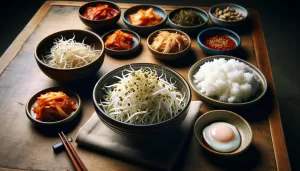
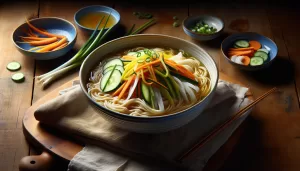
Pickled and preserved vegetables comprise the second condiment
category, and they are eaten almost on a daily basis. To pickle, the
Vietnamese use white rice vinegar, sugar, and salt. To preserve, they use
salted water. My mother used to pickle vegetables in great quantity to
accompany barbecued meats and seafood, especially during the spring and
summer months. Our favorites were always carrot, cucumber, and daikon, and
this tradition continues today. I've also included a recipe for preserved
mung bean sprouts, which are delicious served with grilled meats and
seafood.
The third category includes flavorings that are generally not served at
the table but are used during the preparation of various dishes.
Sate — peanut, garlic, and chili paste — is one of the many exotics
used in Vietnam. It is often simply added to stir-fries, creating simple
yet interesting meat, seafood, or vegetable dishes that can be served over
steamed rice for lunch or dinner.
The fourth category is garnishes, which include fried shallots,
scallion oil, and fried garlic oil. These are often drizzled over steamed
pâtés, soups, and grilled meats or seafood. For example, fried shallots
are often sprinkled over a bowl of pho ga, rice noodle and chicken
soup, to add a crunchy texture as well as sweeten the soup. Scallion
oil complements cha dum, steamed beef pâté. Fried garlic
adds a pungent, uplifting note to canh ca nau dua, a sweet and sour
fish and pineapple soup.
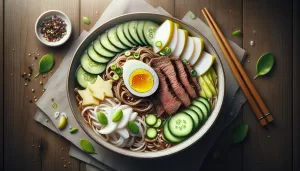
Lastly, aromatic greens called traditional
herbs and table
salad are generally used to add texture, flavor, and freshness to
cooked dishes brought to the table. Traditional herbs include such exotics
as holy basil, rau ram, saw leaves, la lot leaves, cilantro, and mint,
which are among the most commonly used. The table salad can include cooked
rice vermicelli, lettuce leaves, sliced cucumber, unripe star fruit, fresh
chilies, shredded carrot, and lime or lemon wedges. Traditional herbs are
served generally with the table salad to complement cha gio, spring
rolls, and nem nuong, grilled pork meatballs, for example, and
specifically with pho, rice noodle and chicken, beef, or pork
soups.
When preparing the table salad, make individual piles of each
ingredient on one platter; traditional herbs are similarly arranged. With
regard to the herbs, be sure to leave the stems intact, as it is up to
each diner to pick the leaves off and use them as they prefer. The leaves
are always freshly torn. You can find most of the exotics in Asian
markets. If not, do not be discouraged. I always find that the problem
goes away as long as you have cilantro, an herb that today is available in
any supermarket.
You can also donate to help us to continue to provide our services Thanks for your support.
Clicking on these ads helps provide funds and scholarships to poor students at Pongyang Elementary School in Chiang Mai, Thailand. The children there thank you for your support. And so does AsiaRecipe.com...
We know banners can be annoying at times, but we hope you will appreciate the good your support does. Thanks for your patience.