| |
 |
|
Cellophane Noodles: Thai name is Wun
Sen
Cellophane Noodles are fine, string-like, dried
transparent noodles made from mung beans. They
are only available dried. They have firmer texture
than the rice noodles once softened. To soften
Cellophane Noodles, soake them in warm water for
10-15 minutes, but sometimes they are plunged
into boiling water and cooked until tender. The
are used in salads, spring rolls and soups.
|
 |
|
Corn Flour: Thai name is Pang Khao
Pood
Cornflour is among the most commonly
used in Thai cooking. As part of a marinade, corn
flour helps to coat food properly and to give
dishes a velvety texture. It also protects food
during deep-frying by helping to seal in the juices,
producing a crisper coating than does wheat flour.
It can also be used as a binder for minced stuffings.
Corn flour is blended with cold water until it
forms a smooth paste and is then added at the
last moment to sauces. The mixture will look milky
at first, but when the dish is properly prepared,
the corn flour turns clear and shiny as it thickens
the sauce. To prepare, mix two parts liquid to
one part corn flour before adding to a sauce.
|
 |
|
Egg Noodles: Thai name is Ba Mee
These noodles owe their yellow colour to the egg
use in their manufacture. Sold fresh in nests,
they must be shaken loose before being cooked.
They come in both flat and round shapes. Very
thin ones are know as egg thread noodles. The
flat noodels are generally used for soups and
the rounded type are preferred for stir-frying.
Egg noodles freeze well, provided they are correctly
wrapped. Thaw thoroughly before use.
|
 |
|
Glutinous Rice Flour: Thai name is
Peang Kow Nuew
Glutinous Rice Flour is also known as sweet rice
flour or sweet rice powder, this flour is made
from short-grain rice that becomes moist, firm
and sticky when cooked, a result of its higher
proportion of waxy starch molecules. Because of
its chewy texture, glutinous rice flour is a favorite
base for dumplings, buns and pastries. Sweets
made with glutinous rice flour are popular and
widely available throughout Southeast Asia. Useful
Hints, regular rice flour cannot be substituted
in recipes that call for glutinous or sweet rice
flour.
|
 |
|
Rice Flake Noodles: Thai name is Kuay
Chap
These big, flat rice noodles look like
tortilla chips. They're used in soups and stir-fries.
Before using them, soften them in hot water, then
boil them briefly, usually not more than a minute.
|
 |
|
Rice Flour: Thai name is Paeng
Khao Jao
Paeng khao jao is made from non-glutinous raw
rice that has been very finely ground. It is used
to make the dough for fresh rice noodles and is
also used to make desserts such as pancakes. Rice
flour is readily available in Asian food stores.
When the source is non-glutinous rice it is called
paeng khao jao and when it is made from glutinous
rice it is known as paeng khao niao. Store it
as you would wheat flour.
|
 |
|
Tapioca Flour: Thai name is Paeng Man
Sam Pa Lang
Tapioca flour, paeng man sampalang is made from
tapioca, or cassava, tubers. When this or any
of the other flour is used to thicken a sauce,
it is first mixed well with a little water so
that it will not lump in the sauce.
|
 |
|
Rice Noodle Nests: Thai name is Khanom
Chine
Although the Thai name of these fresh thick round
rice noodles means Chinese noodles, these are
actually a Thai speciality, made of rice flour.
In the Lacquer Pavilion of Suan Pakkad Palace
there is a panel showing the making of khanom
chine as part of the preparations for the Buddha's
last meal. Khanom chine are white and the strands
are a little thicker than spaghetti.
At most markets in Thailand, nests of these noodles
are a familiar sight. They are sold freshly cooked.
You buy them by the hundred nests and should allow
four or five nests per person. Buy the cheaper
ones, because they" taste better although
they are not so white as the more expensive noodle
nests.
Fresh noodles are highly perishable, so, even
though they are cooked, it makes sense to buy
them early in the day, and steam them again when
you get them home. They can be served with nam
ya, nam prik, sow nam and a variety of curries.
|

|
|
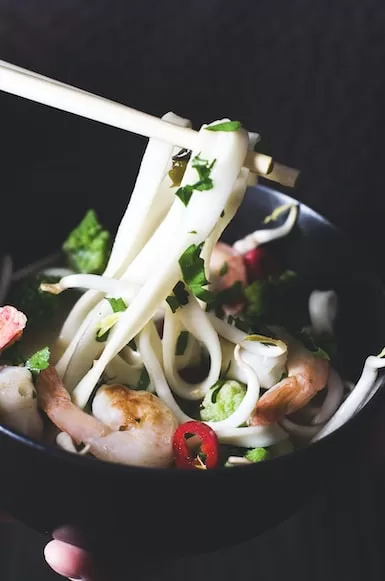
Rice Noodles: Thai name is Kui Teow
Both fresh and dried rice noodles are available
in Thai markets. Fresh ones are highly perishable
and must be cooked as soon as possible after purchase.
Rice noodles are available in a wide range of
shapes and widths.
Medium Rice Noodles: Thai name is Kui Teow Sen
Lek
Resembling spaghetti, these noodles are sold both
fresh and dried. The city of Chanthaburi is famous
for dried sen lek noodles, which are sometimes
called Jantoboon noodles after the nickname for
the town.
Rice Stick Noodles: Thai name is Kui Teow Sen
Yai
Also known as rice river noodles, these are sold
both dried and fresh, although the latter form
is more popular. When fresh they tend to be rather
sticky and need to be separated before cooking.
|
 |
|
Rice Paper: Thai name is Bang Hor
Made from a mixture of rice flour, water, and
salt these are rolled out by machine to paper
thinness and then dried in the sun. They are used
extensively for wrapping Thai fresh spring rolls
and deep fried spring rools. Deep fried spring
rools are wrapped with crispy fresh lettuce and
herbs and finally dipped in a sweet, sour hot
sauce. Useful Hints: Rice paper must be softened
before use. Simply immerse them, one or two sheet
at a time, in a warm water. Soak them until they
are soft, approximately1 or 2 minutes. Handle
them carefully as the sheets are brittle. Drain
them on a linen towel before rolling.
|
 |
|
Tapioca Pellets: Thai name is Sa Khu
Met Lek
Tapioca pellets, sa khu met lek are the tiny balls
(about 2 mm in diameter) made from tapioca, some
used in sweets. They should be mixed with hot,
but not scalding, water and kneaded, and then
allowed to stand for a time covered with a damp
cloth to permit the water to penetrate to the
core.
|
 |
|
Vermicelli Rice Noodles: Thai name
is Sen Mee
Vermicelli Rice Noodles are white and folded into
a block. Before use, soake them in water for 10-15
minutes to soften them. They are used in stir-fries
and soups. If they are to be used as a garnish
or for the noodle sih, Mee Grob, the dried vermicelli
is deep-fried until it puffs up. Vermicelli Rice
Noodles separate and puff up when deep-fried and
a little goes a long way so always deep-fry in
small quantities.
|
 |
|
Wonton Wrappers: Thai name is Baang giow
These wafer-thin wrappers are made from egg and
wheat flour. They are available both fresh and frozen.
Defrost frozen wrappers before use and keep them
covered with a damp tea towel to prevent drying
out. The sizes avaliable range from 8 cm/3.5 in
to30 cm/12in square, and they usaully come in packets
of 20. |
|
|