A Korean meal typically consists of a bowl of rice, bowl of soup or stew, vegetables and side dishes. Korean love to add vegetables to their diet, in fact because of Korea’s agricultural conditions it is abundant in vegetables such as peppers, carrots, cabbage, lettuce and cucumber that is why Korean meal has high vegetable content. There are different Korean vegan dish to choose from. In this post, we have gathered some of the most popular Korean Vegetarian dishes.
Popular Korean Vegetarian Dishes
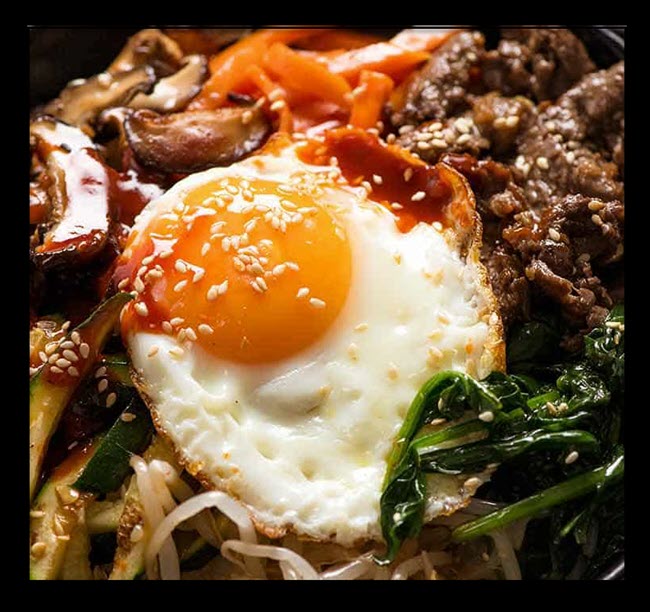
Vegetarian Korean Bibimbap Bowl
Bibimbap is the most popular vegetarian Korean food. It is a rice dish that is made from sautéedvegetables, sauce and some protein rich vegetables.
Bibimbap bowl is a rice bowl that is topped with different types of seasoned vegetables, Kimchi, Gochujang or red pepper paste, meat such as Bulgogi (usually a marinated beef), and with an fried egg cooked as sunny side up.
To finish the dish, it is then sprinkled with sesame seeds and Bibimbap sauce.
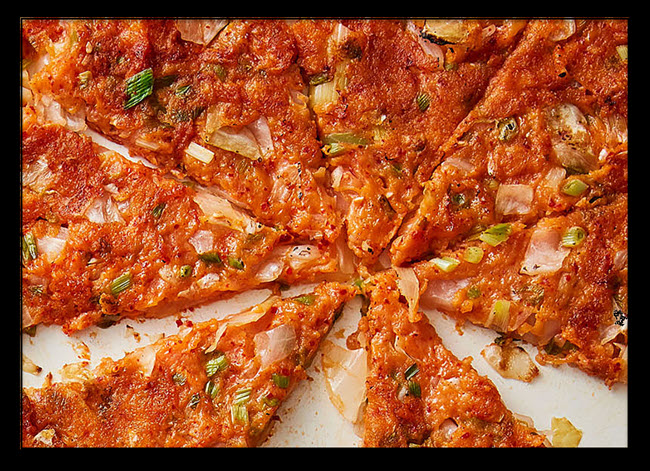
Korean Kimchi Pancakes
Kimchi Pancakes are also called Kimchi Buchimgae or Kimchi Jeon. These are savory pancakes that is made using Wheat flour, seasonings and of course, Kimchi.
A Korean dish that’s easy to make and considered to be an all-time favorite Korean dish. It is hot, crispy, spicy but a little sweet with a hint of sour and salty flavor.
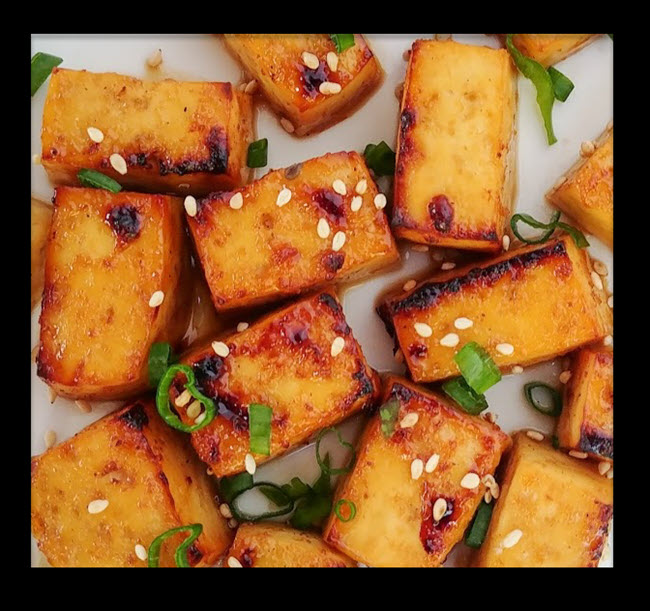
Crispy Korean BBQ Tofu
Another delicious Korean vegetarian dish is the Crispy Korean BBQ Tofu. It has a sweet and savory taste. It is smoky and meaty too.
Crispy Korean BBQ Tofu is seasoned with Gochujang sauce or red chili paste. Gochujang sauce has a sweet, savory and spicy taste. It is made from Gochu-garu (Korean chili pepper), Glutinous rice, Meju powder, salt and Yeotgireum (a powder with a sweet and malty flavor).
This vegetable dish is best to place on top of a bowl of rice then sprinkled with sesame oil, sesame seeds and scallions too.
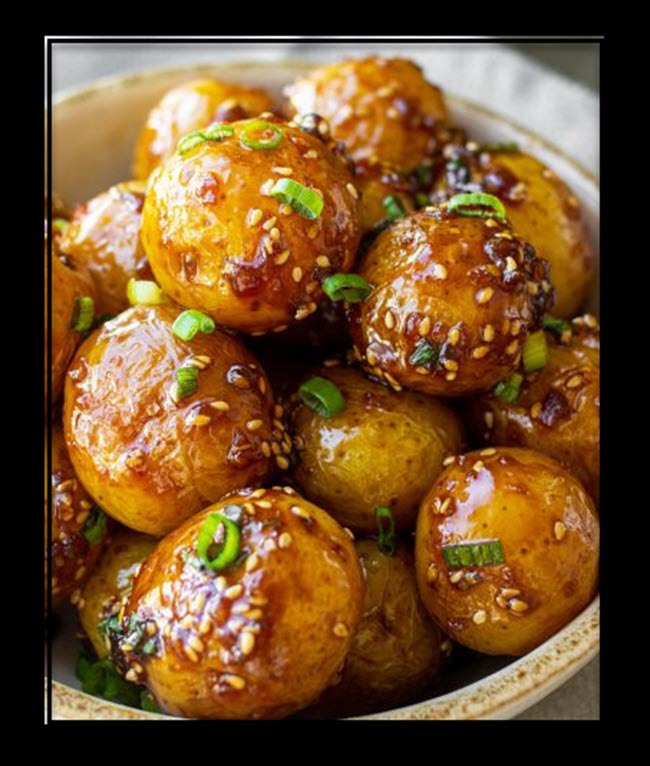
Korean Braised Potatoes
Korean Braised Potatoes is also called Gamja Jorim. In Korea, Gamja means Potatoes and Jorim means braised and Al means egg (the size of the potatoes, like that size of a quail eggs).
A type of side dish Korean food that goes along well when eaten together with rice. The small potatoes are braised using soy sauce and rice syrup.

Korean Sweet Potato Latte
If you are wondering why is this considered a vegetable dish in Korea. Well, Goguma latte is a beverage using sweet potatoes that are roasted or steamed, sugar and milk are added to it. The term Goguma means sweet potatoes in Korea.
It taste sweet and creamy that somehow give the latte its distinct flavor and taste. It is the most popular drink in Korean especially during winter season and fall.
Although the drink is called a latte, it does not actually contain any coffee. It has no coffee at all. There are different varieties of sweet potatoes skin such as having yellow flesh, purple and ivory skin.
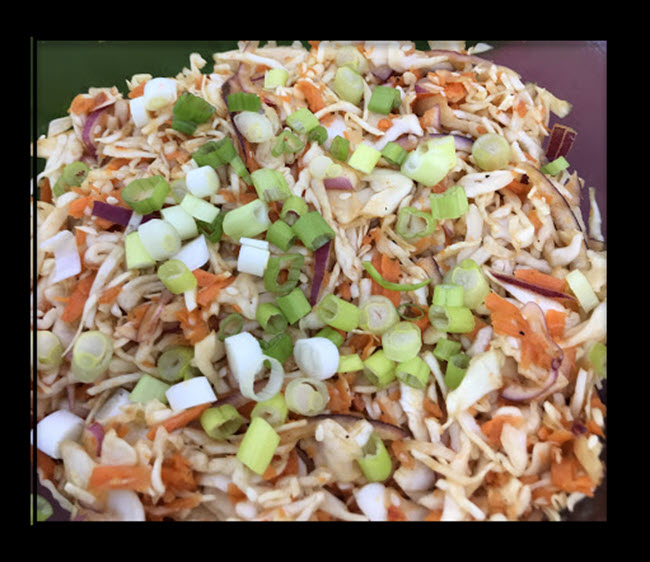
Korean Coleslaw
Korean Coleslaw is actually a Korean Salad. The flavor is similar to that of Kimchi because of the dressings used such as carrots, onions and cabbage. It has a crunchy taste.
It is made from combining ingredients such as soy sauce, sesame oil, garlic and vinegar.
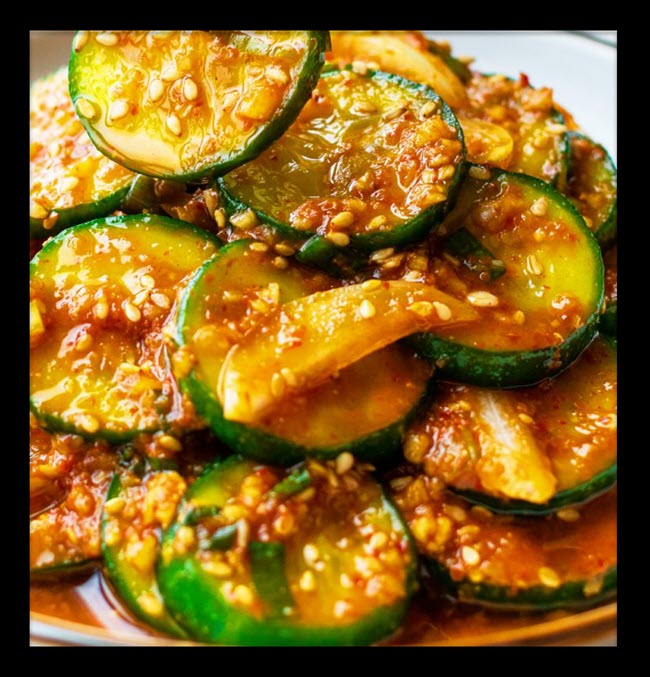
Korean Cucumber Salad
Korean Cucumber salad is also called Oi Muchim, where the term “oi” means cucumbers in Korea.
It is another Korean vegetarian dishes that is usually used as a side dish since it only takes less than 5 minutes to prepare. Goes well as a side dish to bento boxes and BBQ.
For a more crunchier and tasty cucumber salad, you can marinate the cucumbers for a few minutes after slicing it.
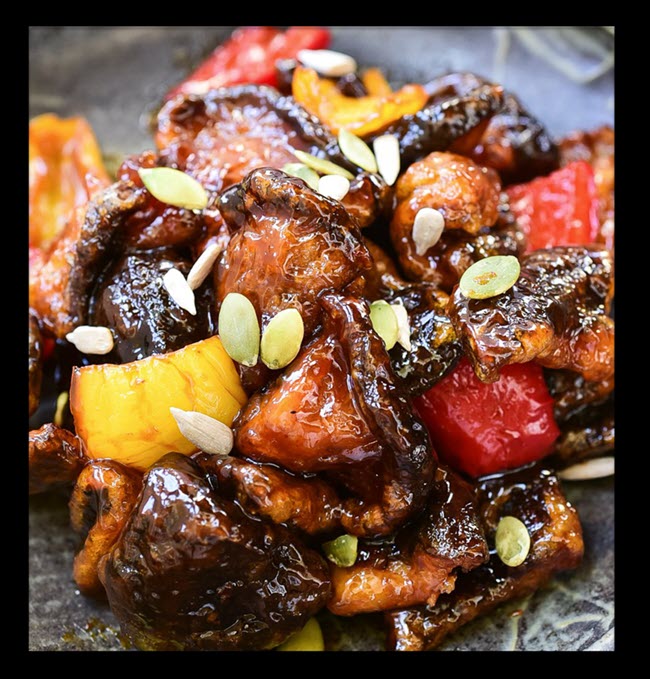
Korean Crispy Mushrooms
Korean Crispy Mushrooms is also called Beoseot Gangjeong. These are mushrooms that are deep fried in oil that are glazed with spicy and sweet & sour.
Dried Shiitake mushroom is the preferred mushroom to use for this type of vegetarian dish as it has a strong earthy flavor. It gives the dish a more concentrated flavor. It also gives the dish its chewy and meaty texture.
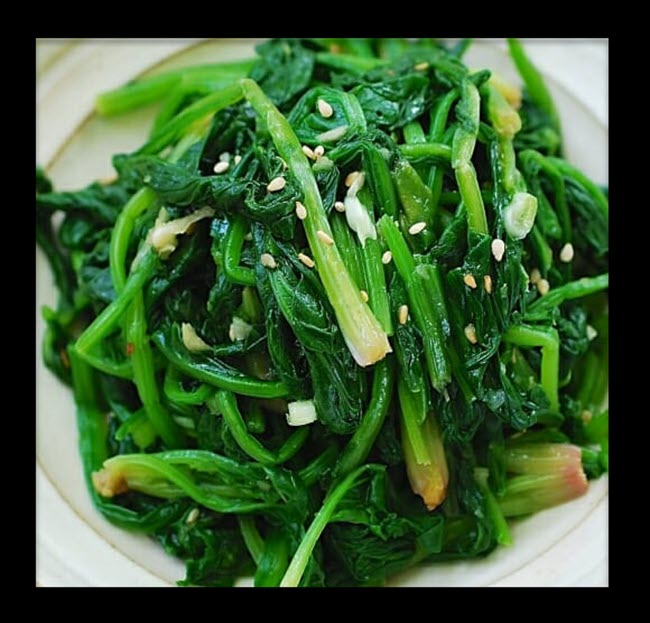
Korean Seasoned Spinach
Korean Seasoned spinach is also called Sigeumchi Namul Bachan. A korean vegetarian dish with simple korean vegetarian recipes.
Sigeumchi Namul Bachan is a sides dish to Korean cuisine. It is made from using blanched spinach that is coated. Other ingredients combined includes soy sauce, sesame oi, sugar, garlic and sesame seeds.
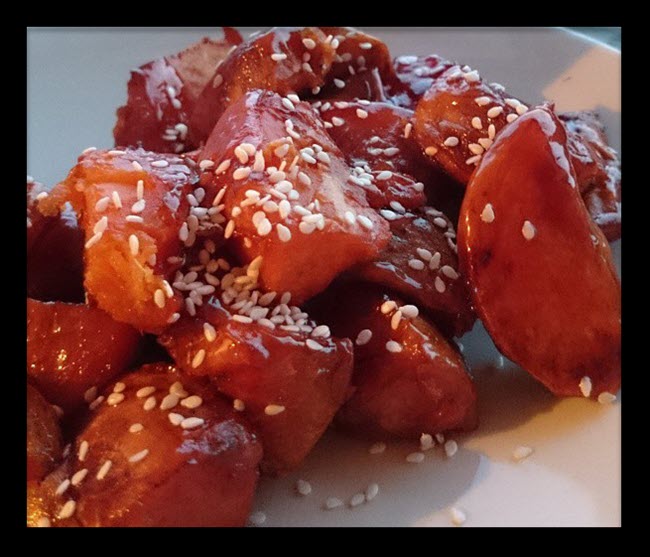
Matang (Candied sweet potatoes)
Sweet Potato Latte was mentioned before, this time we have the Matang or Goguma Mattang. A Korean Candied sweet potato that is a Popular Korean side dish and can be a good snack too.
To make this, the sweet potatoes that were deep fried are coated with caramelized sugar to give you a result of a softer and fluffier on the inside while crunchy texture on the outside.
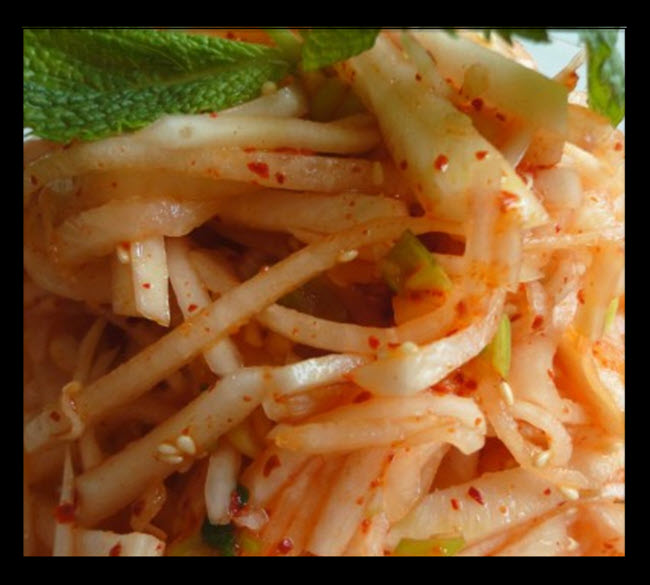
Sweet and Sour Radish Salad (Musaengchae)
It is a salad like dish that is made from Julienned radish. It is seasoned with vinegar, sugar and a pinch of salt.
This sweet and sweet crunchy vegetable dish is irresistibly delicious. You can pair this dish with other meat dishes such as Bulgogi (marinated pork or beef) and Galbi (Grilled ribs).
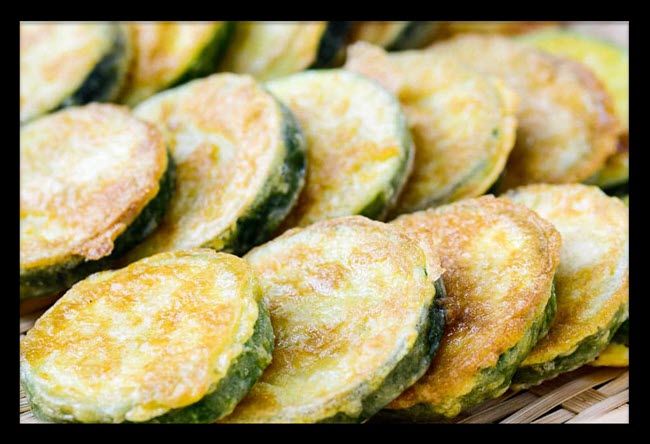
Korean Fried Zucchini
Fried Zucchini is also called Hobak Jun. A delicious side dish that is easy to make. It is usually served with umami soy sauce but you can also used other dipping sauces.
This type of vegetable dish goes will with any Korean food, may it be with bulgogi or Korean soup.
To make this dish, you can simply coat zucchinis with batter of flour and eggs. Add a pinch of salt then sautéed on a grease pan for cooking until golden brown then serve.
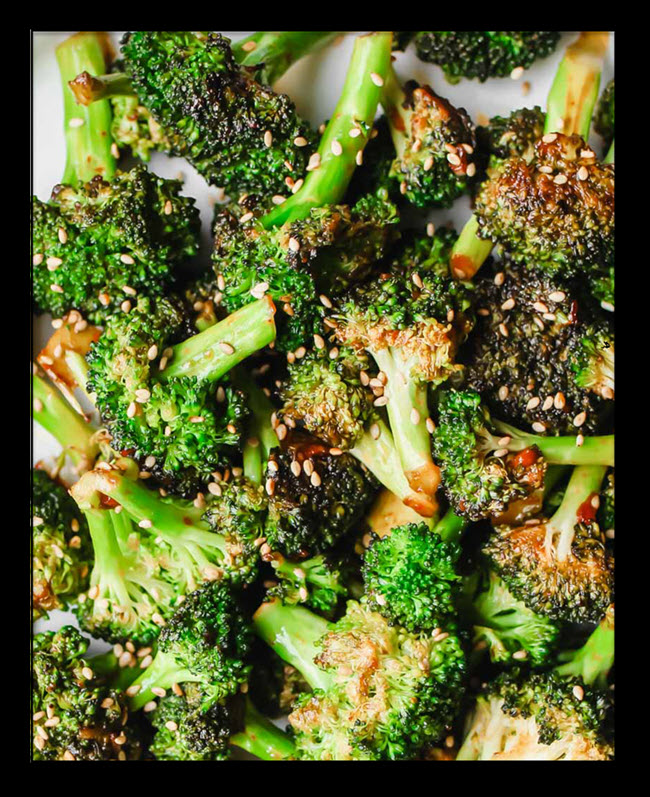
Korean Sesame Broccoli
Although not everyone is a fan of Broccoli, some people somehow learned to eat and love them overtime. What’s good thing about broccoli is that it is not a seasonal vegetable, this means that it is always available all year round.
It is easy to make Korean Sesame Broccoli, all you need to do is to blanch or steam Broccoli. Then add sesame oil, sesame seeds and then finally season it with salt. This will give you a deliciously, crunchy with a nutty flavor.

Korean Rice Cakes
Rice Cakes or also knwon as Tteokbokki (simmered rice cake in Korea is another popular vegetarian dish. It is made from combining rice flour and tapioca starch. Although not entirely a vegan dish, it is usually paired with scallions and boiled eggs.
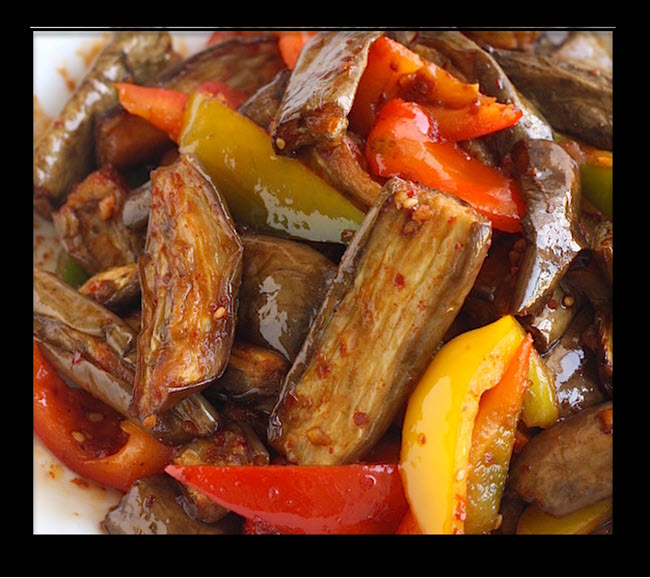
Stir-Fried Eggplant
Eggplants have a tender yet but the flesh are sweet.
Making Korean stir fried eggplant is simple. All you need to do is to stir-fry the eggplant then add seasonings such as Gochujang sauce ( Korean Red Chili pepper paste). For a more spicier dish, you can add Gochugaru which is a Korean Red Chili pepper flakes.

Korean Potato Pancake
Korean Potato Pancake or also known as Gamja-jeon is another variety of Korean Pancake. But with Potato pancake, the grated potato then fried on a frying pan with either using a vegetable oil until it turns golden brown.
Once fried, you can dip the pancake in a soy sauce and vinegar.

Sweet Rice Bundt Cakes
Sweet Rice Bundt Cake is a popular Korean Dessert. It is made from brown rice flour and sweet red bean paste. The texture is similar to that of a corn bread with crunchy crusting on its outside.
If you are looking for a delicious snack meal to eat, the tastes is soo good you can’t go wrong with this one.
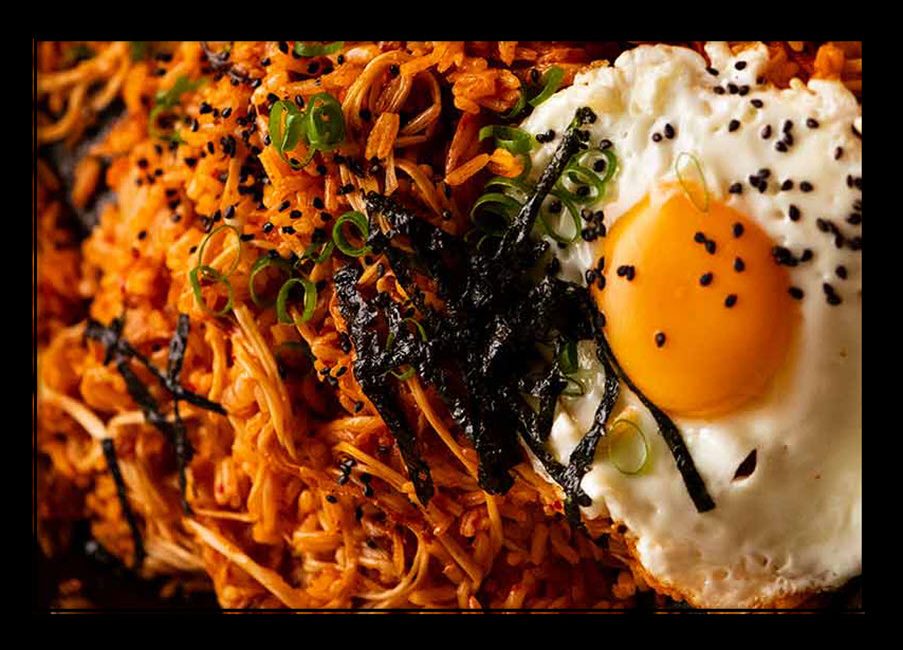
Korean Kimchi Fried Rice
Another Vegan Korean dish that is somehow considered as complete. It has all the required ingredients that you need for getting the right amount of protein, just enough carbohydrates while at the same time getting high vegetarian intake because of the veggies.
The dish is also called Kimchi-Bokkeum. A popular Korean dish that is made of Kimchi and Rice combined with other ingredients such as meat and vegetables.
Conclusion
There are a lot of Korean dishes where the Korean recipes are simple and easy to follow. Vegan recipes involves Korean vegetarian recipes that individuals can easily follow.
Korean Cooking is not hard as others may think, by using the right ingredients you can make and follow the delicious recipes even at the comfort of home.
We hope that this guide has helped you learn more about the different types of Korean vegetable dishes. Which one is your favorite? Let us know what you think.