Beverages has always been a part of our daily routine and every culture has its own distinctive beverages. In Korea, Korean Teas is a beverage that typically consists of warm or boiling water immersed with either of the following leaves, flowers, roots, fruits, mushrooms (edible) and sometimes seaweeds. Korean Tea has a long history that is rooted deeply into Korean Culture. In this guide, we will talk everything about Korean Tea History such as how the tea grows or where it comes from. Since this is all about Korean Tea culture, let us talk about traditional Korean tea ceremony in Korea.
Korean Tea Culture and History
Korean History
In Korean Tea History and Korean Culture, Tea significantly plays a very important role. In relation to how the Korean Tea plant was introduced to Korea, there are actually two versions that we need to look into.
The first version of how the tea plant made it to Korea was in about 1,200 years ago. It is believed that in Hadong (located in South Gyeongsang Province), there was a Buddhist monks. The Buddhist monks brought to South Korea the green tea plant (the very first) all the way from China. And then the plant is planted at a temple called Ssanggyesa Temple.
Another version is taken from the Memorabilia of the Three Kingdoms way back 1280s, the legendary queen known as Heo Hwang-ok (princess of the Ayuta or Ayodhya, India) brought the tea plant to Korea all the way from India and planted the plant on Baegwolsan (a mountain located at the borders of City of Changwon.
Though researchers believed that the tea plant originates from the Yunnan Province located in China but Tea culture simply developed deeply during the Tang Dynasty since during that period of time people starts to appreciate the presence of Tea and also during that period it was also when China was simply at its center of civilization. Culture of Korean tea was spreading rapidly to its neighboring countries such as in South Korea and also in Japan.
Tea is considered to be either an edible plant or as a medicine in Ancient times, but it later developed into a beverage not only because of how good a tea tastes but also you can easily prepare it and because of its effects.
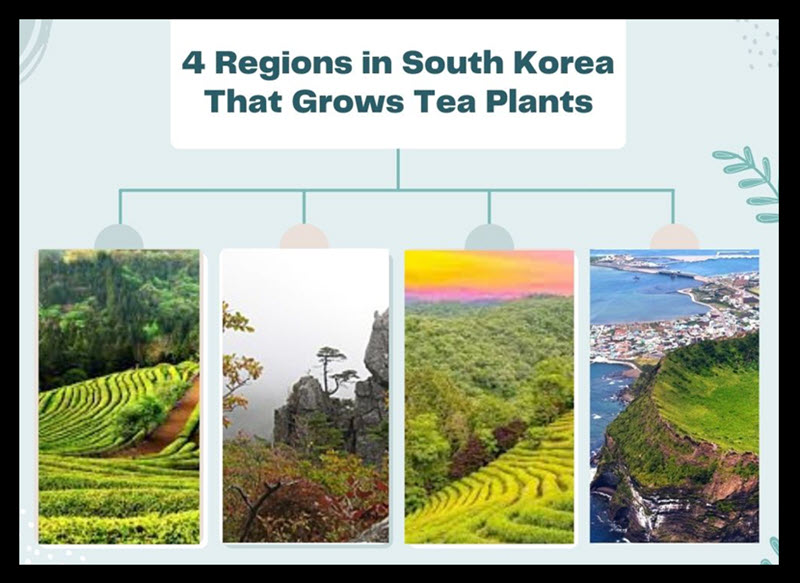
There are at least 4 regions in South Korea that grows tea plants and they are: Boseong, , Jirisan Jeonnam and Jeju Island.
Jirisan
As mentioned, the first tea plant was planted in Ssanggyesa Temple, located in Jirisan.
Boseong
Boseong is where the first commercial plantation of tea. As a matter of fact, most of teas that are produced in Boseong are still removed by hand and hand-roasted using a wok and are still sun-dried. Hence, the same process or the traditional method is still being practiced.
Jeonnam
The Tea plantation in Jeonnam is still considered to be the largest tea producing region. The most common tea plant produced is used for making powdered green tea called Matcha tea because of the region’s natural cool climate.
Jeju Island
Because of the island’s natural environment (sunlight, cool winds, good water supply and volcanic soil) and temperature (14 degrees Celsius), it is a perfect place for planting and growing tea plants.
Korean Tea Culture
Korean Tea Culture surrounds the processed and the serving of teas and any other ritual associated with the tea drinking in Korean Culture. The Korean tea drinking custom, and even its characteristic does not usually change however most of cultural practices somehow goes through modifications that is greatly influenced by the cultures of its neighboring regions and countries.
For Koreans, drinking tea does not only have health benefits, but also considered to be an enjoyable moment. Most of the time, it is offered to guests.
Before, drinking tea also has a stimulating effects that enables a greater sense of understanding between the gods and humans. Also helps in bring back ties between families and friends. In relation to religious ceremonies, Korean tea were used as an offering.
Korean tea rites greatly differs from other ordinary tea ceremonies in other countries, it is actually a dedication rites for the gods and goddesses and a ritual for presenting and giving tea to people.
Korean Tea Ceremony
Korean Tea ceremony is a Korea’s traditional Korean tea ceremony. It is also called as “Darye” which also refers to as “Etiquette for tea” or what is known as “Tea Rite”. The ceremony has been practiced in Korea by Korean people for more than a thousand years as part of their culture.
The first ever documented Korean Tea ceremony was way back year 661 in offering a tea to an ancestral god. Tea was offered to the spirit of King Suro (legendary founder and King of Geumgwan Gaya)
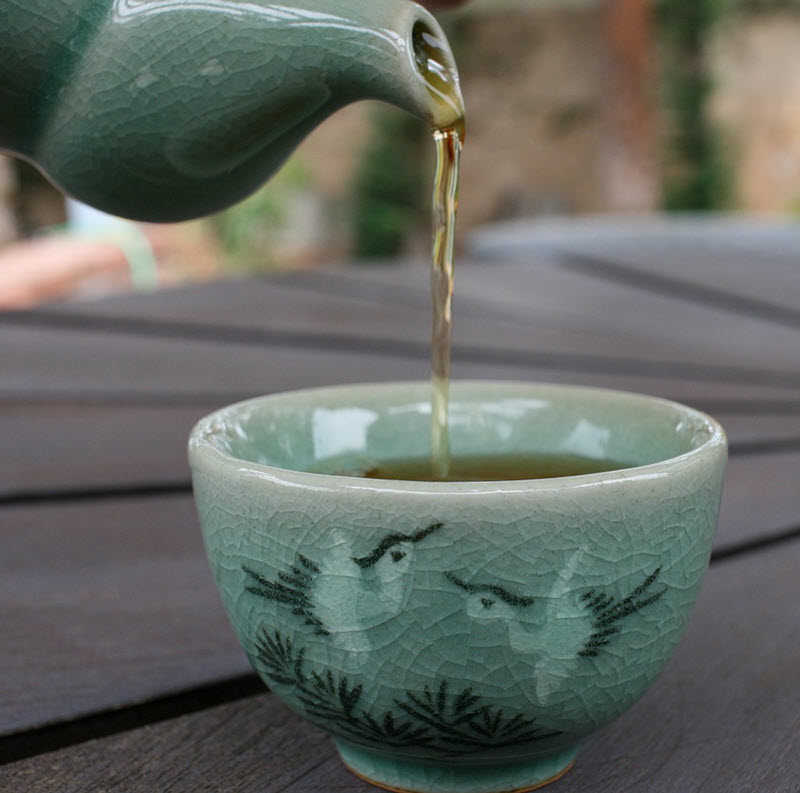
During Goryeo dynasty, it is believed that offerings of Korean tea to spirits of revered monks was made at the Buddhist temples.
During the Joseon dynasty dated 1392-1910, the drinking of tea carries on and continued. A royal ceremony called “Tabang” was made and the Yi Family (royalty) used teas for these simple rites which they call Day Tea rite. It is actually a daytime ceremony commonly celebrated. The Special Tea Rite on the other hand is a tea ceremony that is usually done on special occasions. At the same time (Goryeo and Joseon dynasty), Korean’s experienced problems with Tea plantation. Since the climate in Korean Peninsula is cool making it hard to harvest the tea trees even with the harvesting season usually begins just before spring time. During that time, it is still very cold and could be dangerous to harvest.
Queen Tea ceremony is another tea ceremonies in Korean tea culture where it is usually used on special occasions in Soap operas in Korea wherein it is only for the friends, family and servants of the Queen.
Other Korean Tea ceremonies includes:
- Royal Dayre: as the name of the ceremony suggests, it is a ceremony for the royalty such as the Kings. The ceremony usually lasts up to 8 hours.
- Seonbi Darye: is a ceremony held for Korean Confucian Scholars.
- Friends Darye: a ceremony for casual meetings or just an afternoon tea.
After the Joseon Dynasty, common people in Korea also used Korean Tea ceremonies for their ancestral rites.
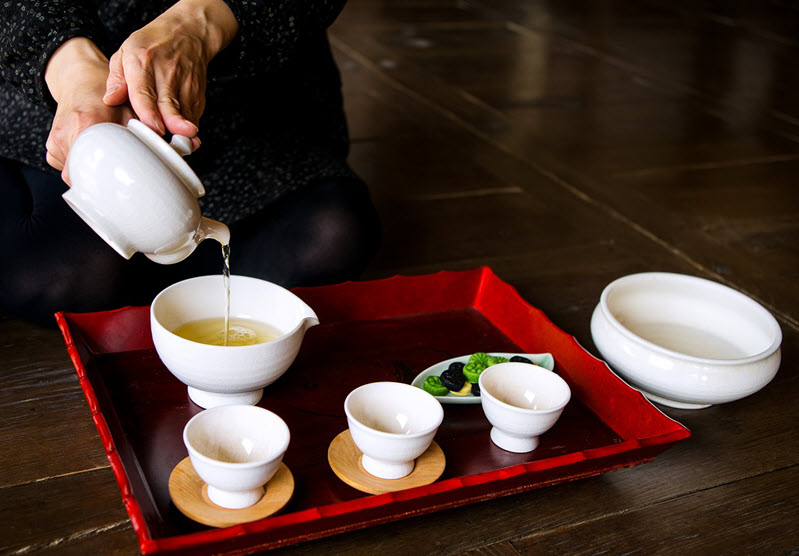
In a traditional Korean Tea ceremonies, the ceremony set consists of 10 components: teacups, teapot, large bowl, cooling bowl, tea scoop, coaster, tea towel, tea container, tea mat and a lid holder.
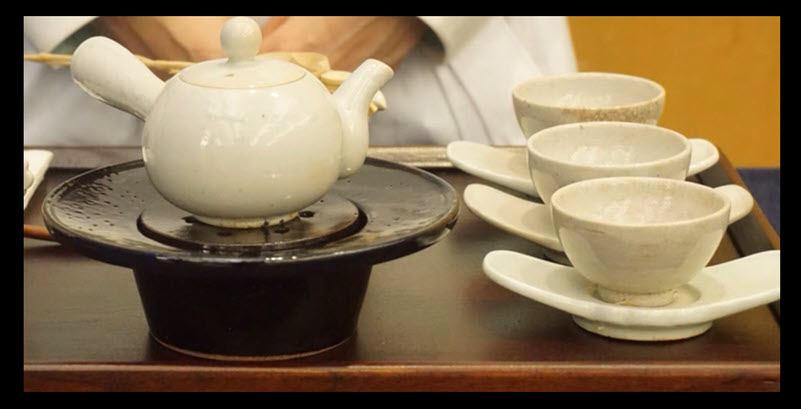
The 3 main steps in Korean Tea ceremony includes:
- Place the tea leaves in the teapot then pour water.
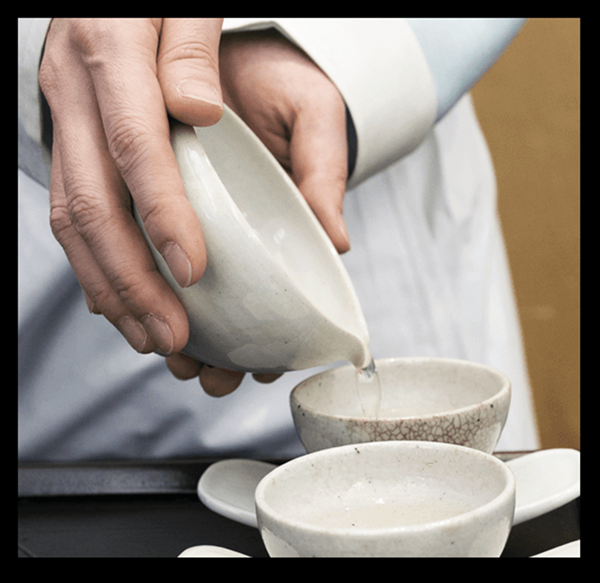
- Allow the tea to steep (about 30 seconds). Slowly pour the tea into fair cup then transfer the tea to the teacups.
- Hold teacups using both hand. Examine the tea for color and smell. Gently take a sip and enjoy the taste of the tea when it touches your mouth then swallow the tea and simply enjoy its aftertaste.
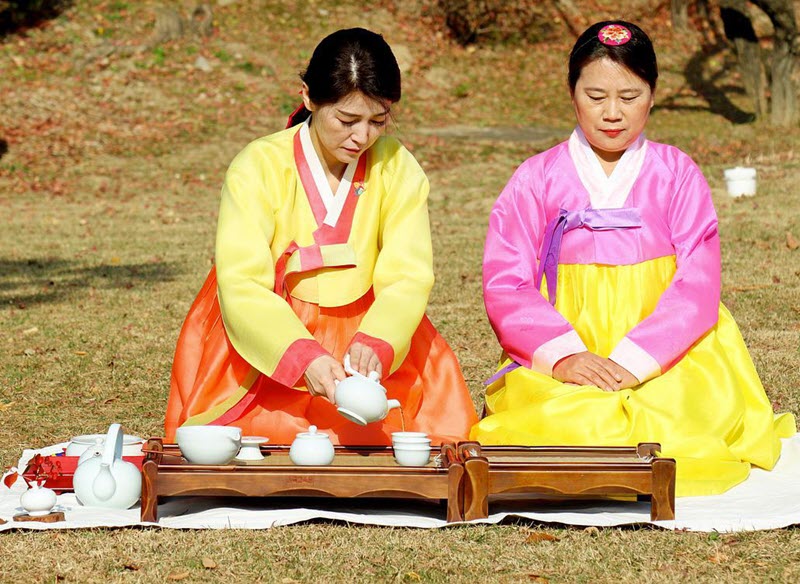
Important points to keep in mind during a Korean tea Ceremony:
- Always pour the tea to the teacups gently and slowly, to avoid spilling the tea.
- Both hand should always be used in holding the teacups.
- Pouring and offering tea differs with male and females
- Do not forget to clean hands using the remaining green tea.
- It is a tradition for foot baths and massages with green tea during winter season.
Korean Teas
There are different varieties of Korean Teas. The most common tea is the Green tea however there are also other popular types such as the yellow tea, the black tea and the fermented tea.
Although there may be different tea varieties, their commonality is the tea plant named as “Camellia Sinsensis” from where they were harvested. But there are also several tea plant varieties and each have its own distinctive taste.
Most of the time, how the tea leaves are processed is what makes each of these teas differs from the rest of the teas. To cite an example, check it out below:
Green Tea is unoxidized. This means that the leaves of the tea are heated before the process of production. While Black tea is considered to be an Oxidized tea. The tea leaves were process allowing for normal oxidation reactions to simply occur. With Yellow tea, the process is similar to green tea but a modification is made such as altering oxidation process resulting to its yellow hue. Then we have the fermented tea, it is similar to pu’er wherein it usually goes through many steps and similar to wine that it also ages