Have you been craving Indian food lately? But, are you one of those people that enjoys dishes that are flavorful, varied, appealing, and healthy? Don’t worry, Indian food definitely falls within this category.
This article is about Indian Food Culture And History. Discover the things you need to know about Indian Cuisine and its history. Continue reading if you’re interested in learning more about Indian food history and Indian dishes.
Indian Food Culture And History
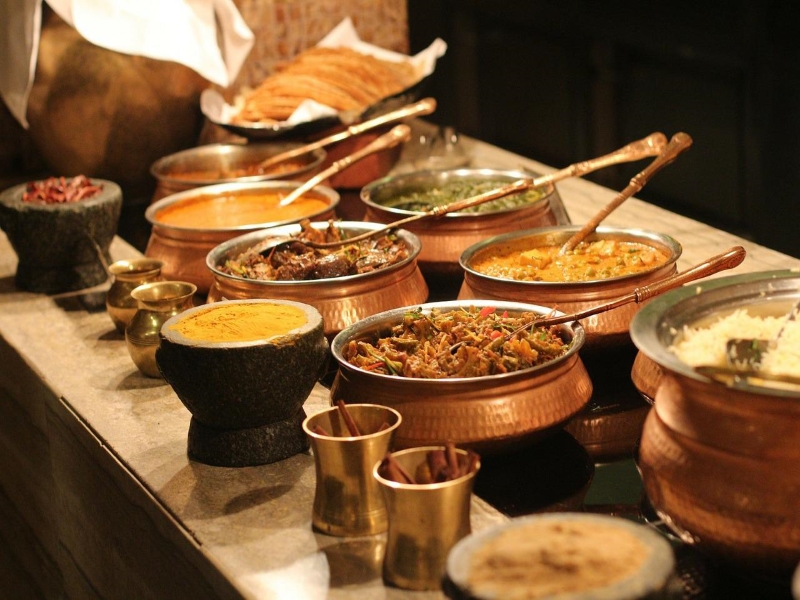
What Is Indian Cuisine?
Indian cuisine includes a wide range of regional and traditional dishes from around the Indian subcontinent. These cuisines differ significantly due to differences in soil, climate, culture, ethnic groups, and occupations, and use locally available spices, herbs, vegetables, and fruits.
Religion, primarily Hinduism and Islam, as well as cultural choices and traditions, have a strong influence on Indian cuisine. Indian cuisine is one of the most diversified throughout the world, distinguished by its complex and sophisticated use of the various spices, cereals, vegetables, and fruits. The different demographics of the ethnically diverse Indian subcontinent are reflected in the cuisine of each geographical region, which encompasses a vast variety of foods and Indian cooking styles. The religious beliefs and culture of India have influenced the evolution of its food. Many Hindu, Buddhist, and Jain communities consume vegetable dishes or follow a vegetarian diet .
Invasion, economic links, and colonization have all led to the advent of certain cuisines to this nation. The discovery of the New World by Christopher Columbus introduced a variety of new vegetables and fruits to India. Potatoes, chilies, peanuts, tomatoes, and guava, for instance, have become staples in many Indian areas, such as South Indian cuisine and North Indian cuisine.
History Of Indian Cuisine
Many food and cultural factors have been introduced as a result of extensive immigration and cultural intermingling throughout generations. Because of India’s unique environment, which varies from deep tropical to alpine, a diverse range of resources are readily available to its many culinary schools. Food has become a marker of religious and social identity in many cases, with various stigmas and choices driving certain communities to develop thoroughly with the sources of food considered appropriate.
Indian food reflects an 8,000-year period of numerous ethnicities and cultures engaging with the Indian subcontinent, resulting in today’s diversity of flavors and regional cuisines. Later, trade with the British and Portuguese influenced Indian food, which was already diversified.
Vegetarianism among India’s Hindu, Buddhist, and Jain populations has had a significant impact on Indian food. In India, hardcore vegetarians account for 20–42 percent of the population, whereas ordinary meat eaters account for less than 30 percent.
Sesame, eggplant, and humped cattle had been bred in the Indus Valley by circa 7000 B.C.E. Most of those recipes date back to the early Vedic period, when India was still extensively wooded and agriculture was supplemented by game hunting and forest products. Fruit, vegetables, meat, grain, dairy products, and honey were all part of the Vedic diet. Some people adopted vegetarianism as a result of the ancient Hindu idea of ahimsa, which prohibits the killing or damaging of sentient beings since aggression has negative karmic effects. Rice and vegetables are cooked together in the Mahabharata, and the name “pulao” or “pallao” has been used to describe to the food in ancient Sanskrit writings like Yjavalkya Smti. Ayurveda, an ancient Indian wellness philosophy, emphasizes a comprehensive approach to health that includes food, dhyana (meditation), and yoga.
Middle Ages-16th Century
Invasions from Central Asia, Arabia, the Mughal empire, and Persia later had a significant impact on Indian cuisine. Mughlai cuisine emerged from the Islamic conquest of medieval India, which imported fruits like apricots, peaches, melons, and plums, as well as rich gravies, pilafs, and non-vegetarian meals like kebabs. The Mughals were great cooks, and under the periods of Jahangir and Shah Jahan, magnificent delicacies were made. Mughlai cuisine, is a mixed cuisine of India and Central Asia. Hallmarks include seasonings such as saffron.
Colonial Period
The British and Portuguese brought cooking techniques and dishes from the New World and Europe during their occupation. They have also influenced Indian cooking. Tomato, potatoes, potato, squash, sweet peanuts, and chilli are some of new-world vegetables used in Indian cuisine. On Hindu fasting days, most New World vegetables such as sweet potatoes, potatoes, amaranth, peanuts, and cassava-based Sago are permitted. The British introduced cauliflower in 1822. An autobiography written by a Scottish, Robert Lindsay in the late 18th or early 19th century recounts a Sylheti man named Saeed Ullah cooking a curry for Lindsay’s family. This is likely the earliest evidence of Indian food in the UK.
Elements Of Indian Meal
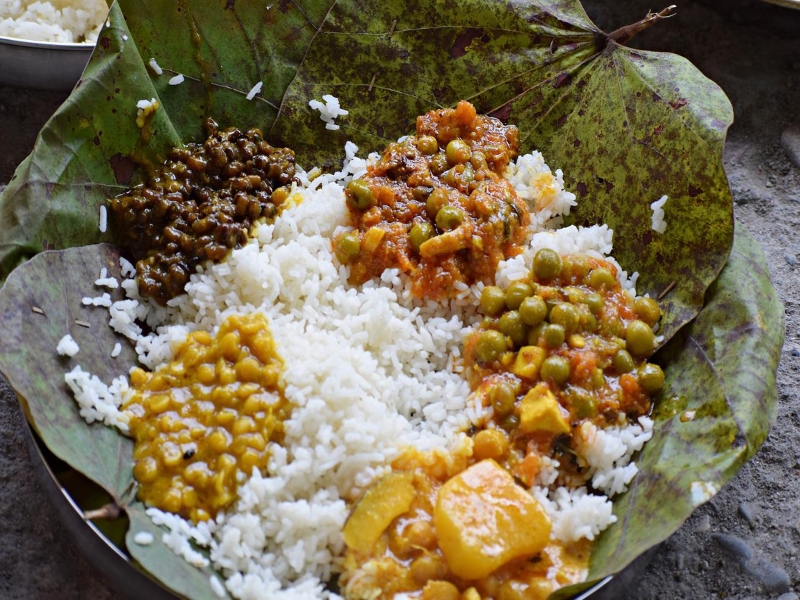
Rice (staple food), atta/whole wheat flour, and a myriad of pulses, the most prominent of which are masoor, typically red lentil, chana or bengal gram, toor, which is pigeon pea or yellow gram, urad orblack gram, and mung or green gram, are hallmarks of Indian cuisine. Whole, dehusked, or split pulses, such as dhuli moong or dhuli urad, can be utilized. In the form of dal, pulses are widely used. Other pulses, such as chana and “Mung,” are also ground into flour/besan.
Vegetable oil is used to fry most Indian curries. Groundnut oil has long been the favored for frying in North India and Western India, while mustard oil is used in Eastern India. Coconut oil and sesame (gingelly) oil are widely used in Southern India. Sunflower and soybean oils have gained popularity in Indian food industry in recent decades. Vanaspati ghee, or hydrogenated vegetable oil, is another common cooking medium that can be used in place of Desi ghee (clarified butter).
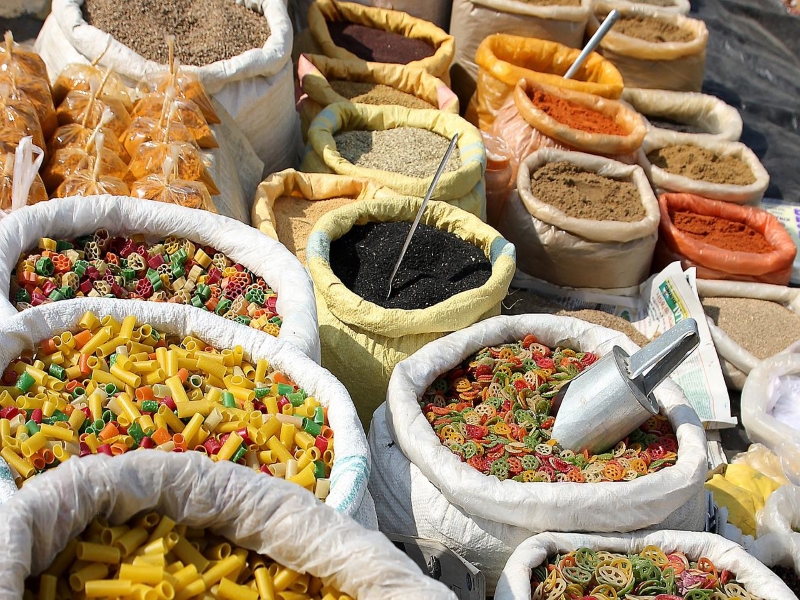
Chilli pepper, black mustard seed or rai, turmeric (haldi, manjal), cumin or jeera, fenugreek/methi, ginger (adrak, inji), asafoetida (hing, perungayam), and garlic are the most essential and often used spices in Indian cuisine (lassan, poondu). Garam masala is a popular spice blend that is made up of five or more dried spices, most typically cinnamon ,cardamom, and clove. Garam Masala is made differently in each region. In Maharashtra, Goda Masala is a popular spice blend. Tejpat or cassia leaf, fenugreek leaf, coriander leaf, and mint leaf are some of the most often utilized leaves. Curry leaves are used frequently in South Indian cooking. Cardamom, saffron, nutmeg, and rose petal essence are utilized in sweet Indian foods.
Meat dishes are also popular in Indian cooking. Different types of meat are used, although chicken and mutton are the most popular. Beef and fish are also consumed in various parts of India, however, they are not extensively consumed outside of coastal areas and the north eastern.
Varieties Of Regional Cuisines
As a result of differences in Indian culture (local), physical location (proximity to the sea, desert, or mountains), and economics, cuisine depends across India’s different regions. It also fluctuates according on the season and whatever fruits and vegetables are available.
Andaman And Nicobar Islands
The cuisine of the Andaman and Nicobar Islands is dominated by seafood. Roots, honey, fruits, meat, and fish, all obtained through hunting and gathering, are staples of the Indigenous Andamanese diet. Insects were also considered delicacy. However, food has changed as a result of immigration from India’s mainland.
Andhra Pradesh
Andhra Pradesh cuisine is notable for its extensive use of spices and tamarind.
The state’s coastal region is known for its seafood. Rice is the staple food, as it is in many South Indian states, and it is served with lentil dishes like pappu(lentils), and pulusu or stew, as well as spicy veggies or curries.
Leafy greens or veggies like bottle-gourd and eggplant are commonly added to dal in Andhra. Mango-based pickles like avakaya and maagaya, gongura, a pickle produced from sorrel leaves), usirikaya (gooseberry or amla), nimmakaya (lime), and tomato pickle are also popular.
Perugu or yogurt is a traditional condiment for enhancing spiciness in dishes. Dosa, vada, pesarattu or mung bean dosa, and idli are also some of the breakfast options.
Arunachal Pradesh
Rice, fish, beef, and leafy vegetables are the typical meal of Arunachal Pradesh. Arunachal’s native tribes are meat eaters who prepare their meals with fish, eggs, beef, chicken, hog, and mutton.
Their rice comes in several variations. A typical snack is boiled rice cakes wrapped in leaves. Thukpa is a noodle soup popular among the Monpa people of the area.
The most frequently used vegetable is lettuce, which is usually cooked with coriander, ginger, and green chilies.
Apong, or rice beer, is a delightful drink prepared from fermented rice or millet that is common in Arunachal Pradesh.
Assam
The cuisine in Assam is a combination of several indigenous styles, with regional variety and some outside influences. Although Assamese cuisine is recognized for its limited use of spices, the use of endemic herbs, veggies, and fruits served fresh, dried, or fermented gives powerful flavors.
Rice is the basic food, and Assam’s cuisine includes a wide range of unique rice varieties, including various types of sticky rice. Fish, mainly freshwater species, is commonly consumed. Chicken, duck, squab, silkworms, insects, snails, goat, pork, venison, turtle, monitor lizard, are among the non-vegetarian products.
Bengal
Mughal cuisine has had a worldwide influence on Bengali recipes, introducing Persian and Islamic cuisines as well as a variety of more complicated food preparation methods, such as ghee marination. Bengali dishes relies heavily on fish, meat, rice, milk, and sugar.
Meat, fish, veggies, lentils, and rice are staples in the cuisine, which is recognized for its complex flavors. Bread is another famous food in Bengali cuisine, especially a deep-fried variation known as luchi. One of its most unique elements is fresh aquatic fish, which Bengalis prepare in a various ways, including steaming, braising, or stewing in vegetables and sauces made with coconut milk or mustard.
East Bengali cuisine, which is prominent in West Bengal and Bangladesh, is a lot spicier than West Bengali cuisine and uses a lot of chilli, making it one of the hottest cuisines in India and the world.
Two of the most popular dishes are Shondesh and Rashogolla. They are sweet dishes that are made of finely ground cheese. It is believed that the dish originated in West Bengal and the neighboring state of Odisha.
Delhi
Mughal cuisine originated in Delhi, which was formerly the capital of the Mughal empire. The street food in Delhi is well-known. The Paranthewali Gali near Chandani Chowk is only one of the stuffed flat breads (parathas), that is very popular.
Because Delhi is home to people from all across India, the city has a diverse range of eating traditions; its cuisine is inspired by numerous cultures.
Delhi cuisine is a mixture of several Indian cuisines that have been altered in different manners. The various sorts of street cuisine accessible reflect this. Kababs, kachauri, chaat, Indian sweets, Indian ice cream (often known as kulfi), and even Western food items such as sandwiches and patties are prepared in a unique Delhi style and are highly popular.
Gujarat
Gujarati cuisine is mostly vegetarian. Roti (rotlii in Gujarati), daal or kadhi, rice dishes, papad, sabzi/shaak, and chaas make up a basic Gujarati thali (buttermilk).
Sabzi is a stir-fried dish with several veggies and spice ingredients that can be spicy or sweet. Gujarati dishes can have a wide range of flavors and heat levels depending on personal preferences.
Maharashtra
Maharashtrian cuisine is a complex blend of several diverse flavors. It comprises a variety of foods ranging from mild to extremely hot. The Maharashtrian food contains bajri, wheat, rice, jowar, vegetables, lentils, and fruit, among other things.
Puran poli, batata wada, ukdiche modak, sabudana khichdi, masala bhat, pav bhaji, and wada pav are also popular dishes. Breakfast is often served with poha, or flattened rice. Some of the foods prepared for breakfast and snacking in the evenings are kanda poha and aloo poha.
Spicy meat dishes from the Kolhapur region are particularly popular. The Kolhapuri Sukka mutton, pandhra rassa, and tabmda rassa are the three dishes spicy meat dishes. Shrikhand, a Maharashtrian dessert prepared from strained yogurt, is a popular dessert.
Goa
Since the region has a tropical environment, the spices and flavors are overwhelming. The use of kokum is a distinctive part of the cuisine of the region.
Goan cuisine is primarily seafood and meat-based, with rice and fish as staples. The most popular specialty is kingfish (vison or visvan), but other options include pomfret, shark, tuna, and mackerel, all of which are sometimes prepared with coconut milk. Crabs, prawns, tiger prawns, lobster, squid, and mussels are among the most popular shellfish.
Goa’s cuisine is influenced by its Hindu heritage, 400 years of Portuguese rule, and contemporary Indian cuisine.
Bread, which was introduced by the Portuguese, is immensely popular and is an integral part of the Goan breakfast, most commonly served as toast.
North Eastern
The cuisine of the North East India differs significantly from that of the rest of India. North Eastern cuisine is heavily influenced by Burma and the People’s Republic of China, and uses less popular Indian spices. In this part of India, yak is a popular meat.
Beverages
Tea is a popular beverage in India, which is one of the world’s top producers of the tea. Assam tea, Darjeeling tea, and Nilgiri tea are the most recognized tea kinds farmed in India. Tea leaves are boiled in a mixture of milk, water, and spices like cardamom, cloves, cinnamon, and ginger. Tea is frequently consumed in India alongside snacks such as biscuits and pakoda.
Another common beverage is coffee, which is more popular in South India. In certain regions of India, coffee is also grown. Indian filter coffee and instant coffee are the two most popular coffee kinds in India.
Lassi is an Indian traditional dahi (yogurt)-based drink made by combining yogurt with water or milk and spices. Traditionally, lassi is occasionally seasoned with ground roasted cumin and is particularly popular in Punjabi areas and Porbandar, Gujarat. Sugar, strawberry, mango, lemon, rose water, ,and saffron are some of the flavors that can be added to the drink.
Another refreshing drink, sharbat is created from fruits or flower petals. It can be eaten straight from the bottle with a spoon or dissolved with water to make a drink. Plants including rose, sandalwood, bel, sarasaparilla, lemon, orange, gurhal (hibiscus), pineapple, and kokum, falsa, are used to make popular sharbats (Grewia asiatica). In Ayurveda, sharbats are regarded to have therapeutic properties.
A variety of almonds, watermelon kernels, fennel seeds, pepper, rose petals, poppy seeds, cardamom, milk, saffron, and sugar is used to make Thandai. It is a Hindu celebration related with Maha Shivaratri and Holi or Holla mahalla. When making special thandais, bhaang (cannabis) is sometimes added.
Nimbu pani (lemonade), chaas, badam doodh (almond milk with almonds and cardamom), Aam panna, kokum sharbat, and coconut water are some of the other beverages available in India.
Food Habits
A nutritious breakfast is fundamental to Indians. They usually have tea or coffee with breakfast, while cuisine choices vary by location. People in North India love roti, parathas, and a vegetable dish with achar/pickle and curd. There are many multiple kinds of packaged pickles on the market. Harnarains, which began in the 1860s in Old Delhi, is one of India’s oldest pickle-making companies.
Gujaratis prefer dhokla with milk, but South Indians enjoy idli and dosa, which are typically eaten with sambhar or sagu and a variety of chutneys.
In the east and southern India, traditional lunch consists of rice, but in the northern India, whole-wheat rotis are usually consumed. It usually consists of two or three types of vegetables, as well as kulcha, naan, and parathas. In many regions of India, paan, is commonly eaten after lunch and dinner to ease digestion.
Desserts
Various Indian desserts, known as mithai, are fried dishes that contain sugar, milk, or condensed milk. Regions have different ingredients and dessert choices. Many are based on milk products in the eastern region of India, for instance.
Mostly are flavored with almonds and pistachios, seasoned with cardamon, cloves, nutmeg, and black pepper, and garnished with nuts, gold or silver leaf, or both. Rasogolla, jalebi, gulab jamun, laddu, and peda are all well-known Indian desserts.
Etiquette
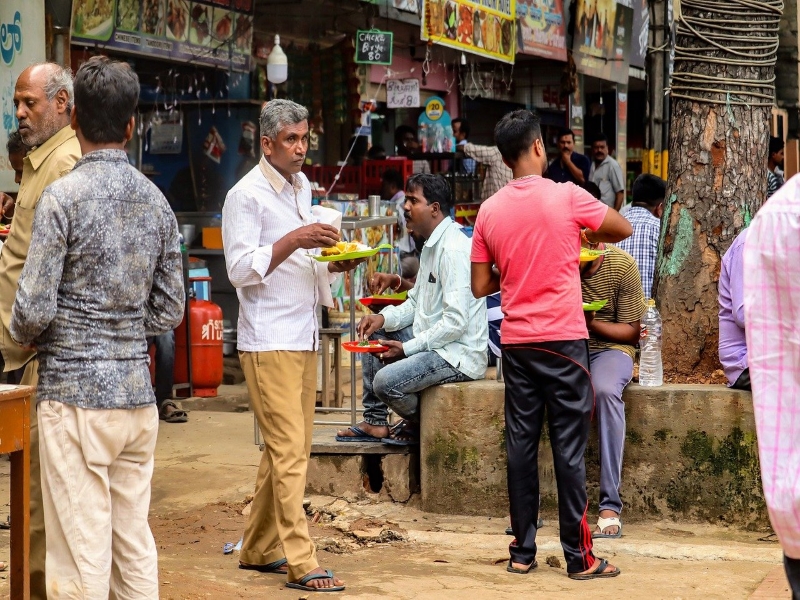
In India, meals are traditionally eaten while seated on the floor, on very low stools, or on a mattress. Rather than using utensils, people chose to eat using their hands.
Roti is commonly used to scoop curry without letting it to come into contact with the hand. A piece of roti is gripped with the thumb and middle finger and pulled off while holding the flatbread down with the index finger.
For dosai, adai, and uththappam, the middle finger is pressed down to support the bread, while the forefinger and thumb grip and detach a little section. Traditional serving methods in India differ by area.
Indian eating etiquette has been affected by various cultures. The Anglo-Indian middle class, for example, frequently uses spoons and forks, as is customary in Western culture.
Clean banana leaves, which can be dumped after meals, are used to serve South Indian food. When hot food is served on banana leaves, the fragrances and flavors of the cuisine are enhanced. Except for rare occasions, leaf plates are becoming less usual.