![]() |
Burma Myanmar (Burma) Myanmar is a
diamond-shaped country extending 925km (575 miles) from east to west and
2100km (1300 miles) from north to south. It is bounded by China, Laos and
Thailand in the east, by Bangladesh and India in the north and by the
Indian Ocean in the west and south.
Tourist numbers are rising steadily. Certain areas in Upper and Lower
Myanmar are currently out of bounds owing to the past civil war check with
the embassy or consulate for the latest information. Most coastal resorts
have now been opened to tourists and Sunday round-trip flights are
arranged by Myanmar Travel and Tour to Napali and Sandoway beaches during
the dry season.
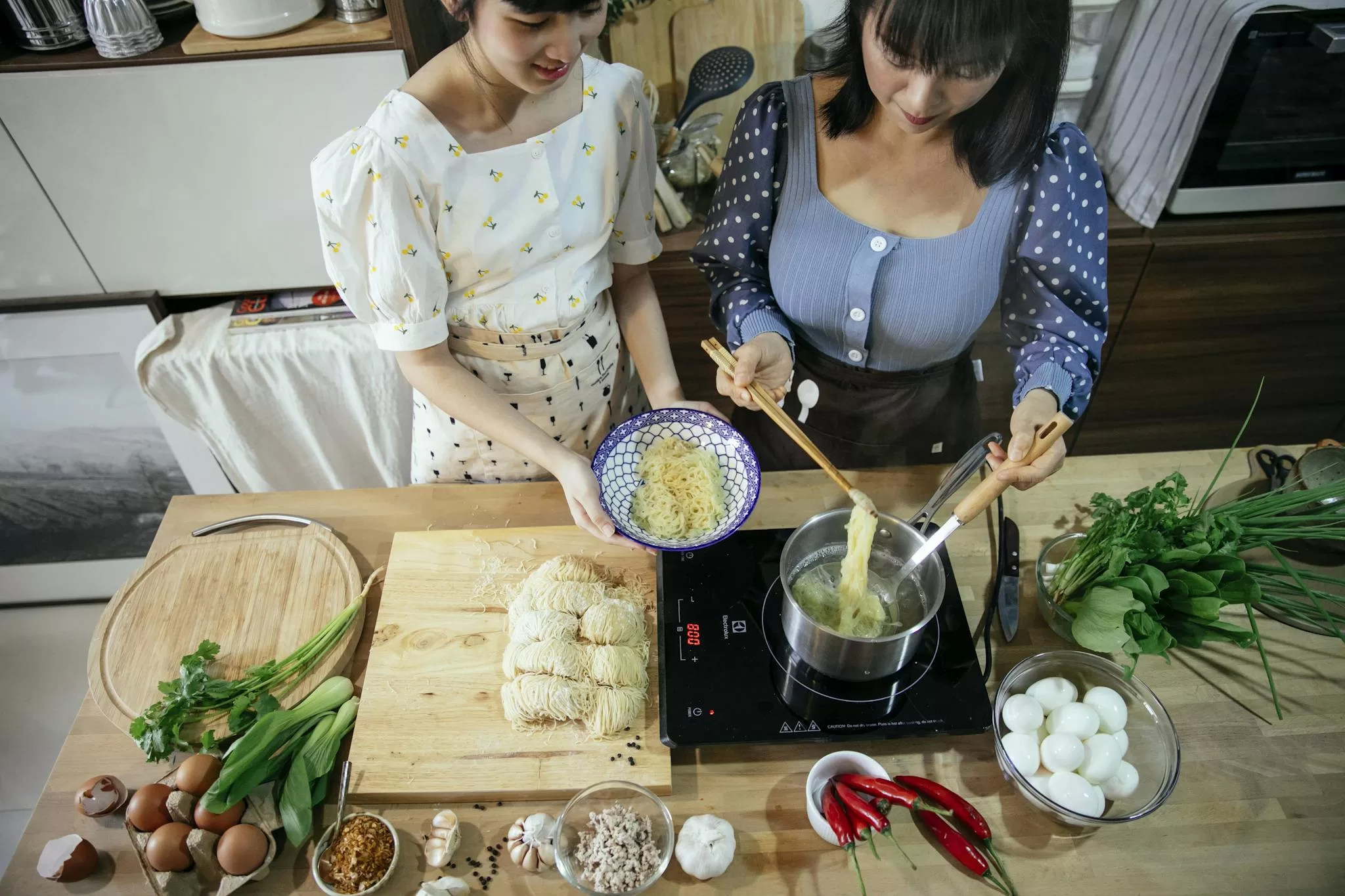
The regional food is hot and spicy. Fish, rice, noodles and vegetables
spiced with onions, ginger, garlic and chillies are the common local
ingredients.
Western-style nightlife is almost non-existent, although there are
occasional performances in Yangon's three theatres as well as a number of
rock and pop groups gaining in popularity.
Environment/ History/ Economy/ Culture/ Basic Info for Traveller/ Money & Costs/ Attractions/ Getting in & out/ Moving Around/ Facts at a GlanceAREA: 676,552 sq km (261,218 sq
miles).
POPULATION: 48,081,302 (1999).
POPULATION DENSITY: 68.6 per sq km.
CAPITAL: Yangon (Rangoon). Population: 2,513,023 (1983).
GOVERNMENT: Socialist Republic since 1974. Power assumed by
the army in 1988. Head of State and Government: General Than Shwe since 1992.
LANGUAGE: The official language is Myanmar (Burmese). There
are over 100 dialects spoken in Myanmar. English is spoken in business circles.
RELIGION: 87% Theravada Buddhist. The remainder are Hindu,
Muslim, Christian and Animist.
TIME: GMT + 6.5.
ELECTRICITY: 220/230 volts AC, 50Hz.
COMMUNICATIONS: Telephone: IDD is available to the main
cities. Country code: 95. Outgoing international code: 00. For emergencies, dial
199 (police), 191 (fire) and 192 (ambulance). There is a limited public internal
service. Only larger cities can be dialled direct from within Myanmar; smaller
towns still use manual switchboards and callers need to ask the operator to
connect them to a specific town operator. The Central Telephone & Telegraph
(CTT) office on the corner of Pansodan and Mahabandoola Streets is the only
public place in the country where international telephone calls can be
conveniently arranged. The office is open 0800-1600 Monday to Friday and
0900-1400 at weekends and on holidays. Fax: May be sent from the Central
Telegraph Office on Mahabandoola Street and there are further facilities at the
Post and Telecommunications Corporation in Yangon. Post: Service to Europe takes
up to a week and letter forms are quicker than ordinary letters. To ensure
despatch it is advisable to go to the post office personally to obtain a
certificate of posting, for which a small fee is charged. Press: The only
English-language newspaper is The New Light of Myanmar. Myanmar Travel
& Tours also publishes a tourist publication, Today, in English.
Locally published magazines in English include Golden Myanmar, Myanmar
Chronicle and Myanmar Perspective, which are all available from
bookshops |
The north-south orientation of Myanmar's mountains defines the courses of its major rivers, the Irrawaddy and the Salween. The Irrawaddy is navigable for more than 900 miles (1,450 km) of its 1,300-mile (2,100-kilometre) length and drains about three-fifths of the country's surface. The Salween basin lies to the east of the Irrawaddy, draining the Shan Plateau region and emptying into the Gulf of Martaban.
Myanmar's tropical climate is influenced greatly by the monsoons of southern Asia. There are three seasons, a cool dry period from late October to mid-February, a hot dry period from mid-February to mid-May, and the monsoon season from late May to late October. Annual rainfall ranges from 200 inches (5,100 mm) along the coastal plains and mountains to 100 inches (2,500 mm) within the delta regions and 35 inches (900 mm) for the central basin around Mandalay. Nearly all of it comes during the monsoons. Average daily maximum temperatures for the coolest and warmest months range between 73? and 89? F (23? and 32? C) in the highlands of the Shan Plateau and between 85? and 97? F (29? and 36? C) at Yang?n in the south.
Only about one-sixth of Myanmar's extremely mountainous land is considered arable; about a tenth of that is irrigated, mostly for rice production. Hardly any of the land is useful as pasture, and half of the country is forested. In Myanmar's lowlands, the natural vegetation varies with precipitation. Where there is more than 80 inches (2,000 mm) of rainfall, evergreen tropical forests predominate (the delta areas support lush mangrove stands); regions with between 40 and 80 inches have plentiful hardwood monsoon forests (including teak); at less than 40 inches, the forests are gradually replaced by scrubland. In the highlands, forests of oak and pine are found above the frost line (3,000 feet [1,000 m]). Animal life is abundant, with the rain forests supporting a variety of birds, mammals, and snakes of various kinds. The elephant and the tiger are also important though endangered species.
Myanmar has silver, copper, lead, and zinc deposits in the Shan Plateau, alluvial deposits of tungsten and tin in the Tenasserim coastal area, and petroleum and natural gas. High-quality jade is also mined in the northern mountains.
Burmans first settled in the area during the 9th century and by the 11th century, led by the Buddhist King Anawratha, had established a powerful kingdom. During the Mongol invasions, the country was captured by Kublai Khan (1287) and subsequently Burma was divided. By the mid-18th century, a new dynasty was established under King Alaungpaya with its capital in Yangon.
Burma was annexed as part of British India in the 19th century, but in 1937 was granted separate dominion status. The independent Union of Burma came into formal existence in 1948, and in 1974 was named the Socialist Republic of the Union of Burma. In 1988, years of idiosyncratic policies, isolationism and chronic economic mismanagement by the then Burma Socialist Programme Party finally brought on a popular uprising, with students and Buddhist monks to the fore. A military coup in September, followed by the brutal suppression of the demonstrations, brought the political upheaval to a halt. Far from threatening it, the coup strengthened the position of Ne Win; the leader of the coup, General Saw Maung, and his senior staff are all known to be long-standing supporters of the reclusive dictator. Ne Win has recently relinquished his official title as leader of the nation, but he continues to exercise considerable influence over the running of the country.
The principal internal opposition is led by ex-army General Tin Oo and the Western-educated liberal Aung Sang Suu Kyi, who is under house arrest. The major armed threat, however, is posed by a variety of border insurgencies. The largest of these groupings is the Karen tribe, whose ranks have been swelled by dissident students fleeing from the capital. In 1989 Burma became officially known as the Union of Myanmar.
After the disturbances of 1988 and 1989, which were savagely put down with the loss of thousands of lives, the Government concluded that some political concessions were essential and announced that elections would be held. The main opposition movements campaigned under the banner of the National League for Democracy and its charismatic figurehead, Aung San Suu Kyi (daughter of Aung San, hero of Burma's independence struggle) won the election, which was held in May 1990, with around 80% of the seats in the National Assembly. However, the Ne Win regime used elaborate delaying tactics and harassment of opposition leaders to hold onto power; Suu Kyi herself was put under house arrest and remained there for five years.
After 1990, the main opposition to the State Law and Order Restoration Council (SLORC) came from outside the capital. Of several movements, the best organised have been the Karens who have operated from a stronghold on the Thai border. Despite setbacks in the last two years, following a ferocious campaign launched by government forces, the Karens remain an organised fighting force, with their ranks bolstered by a flood of recruits escaping SLORC repression. Less fortunate were the Rohingya, a Muslim minority in the north of the country who were subjected to a systematic campaign of terror from SLORC in 1992: those who survived and avoided forced labour or the army went into exile in Bangladesh.
The past 18 months have seen important policy changes on the part of the regime. Self-imposed diplomatic isolation has been replaced by a diplomatic offensive to improve relations with Myanmar's neighbours and with the West (especially Japan and the US). Suu Kyi was released from house arrest in the summer of 1995; despite minimal contact with the outside world, she was an important figurehead for opposition to SLORC.
Initial hopes that these moves were part of a more liberal approach by the regime were dashed when military and political measures against the opposition were pursued with renewed vigour. The changes appeared to be associated with the rise of ex-intelligence chief Khin Nyunt as the new SLORC strongman, a more astute figure than the ageing and increasingly demented Ne Win. As a known hardliner, Khin Nyunt's leadership did not augur well for compromise or negotiation on the part of the Yangon regime. Increased revenues from logging, gem deposits and drug trafficking, moreover, allowed SLORC to re-arm and shore up its military position.
In July 1997, Myanmar was admitted to full membership of the Association of South-East Asian Nations (ASEAN), thereby gaining an appreciable measure of international legitimacy. (ASEAN policy stresses strict non-interference in the internal affairs of member states.) The task of all the opponents of the regime, both Aung San Suu Kyi and the Karen, has become more difficult during the last three years. SLORC's decision in November 1997 to rename itself as the more media-friendly State Peace and Development Council was, perhaps, an indication of its confidence. Since then, the Government has concentrated on dealing with local insurgencies. By 1999, most of these had been quelled – or at least reduced to manageable levels – through a combination of force and negotiation. Public opposition to the regime continues to meet with brutal reprisal but, as the situation stands, the longer the State Peace and Development Council holds power, the more secure it will become.
GDP: US$31 billion
GDP per head: US$684
Annual growth: 4.4%
Inflation: 35%
Major products/industries: teak, rice, jute and illegal opium poppies, heroin, amphetamines
Major trading partners: Thailand,Singapore, China, Japan, India
Culture
Myanmar's traditional culture is an amalgam of folk and royal culture. Buddhism has been a part of Myanmar's culture since the 1st century AD and has blended with non-Buddhist beliefs. The most conspicuous manifestation of Buddhist culture is the magnificent architecture and sculpture of Myanmar's many temples and monasteries, notably those at Pagan, Mandalay, and Yang?n.
In 1886 the traditional drama appeared to be dying with the elimination of the monarchy, but it had permeated the masses and survived as part of the folk tradition. With the growth of nationalism and regaining of independence, it gathered new strength. The most popular dramatic form is the pwe, which is performed outdoors. There are a variety of pwe genres, but most often the subject matter is taken from the Jatakas, the stories of the former lives of the Buddha. Traditional musical forms, influenced by those from neighbouring lands, are highly percussive. Dance forms are derived largely from southern India.
Wood carving, lacquerwork, goldwork, silverwork, and the sculpting of Buddhist images and mythological figures also survived during colonial rule; there has been a revival of these indigenous art traditions under government patronage. Both the arts of bronze casting among the Burmans and of making bronze drums among the Karen, however, disappeared. The traditional marionette show also declined, although occasionally there have been attempts to revive it. The cinema and rock music are two Western art forms that have been accepted in the cultural life of Myanmar.
Burmese literature is an intimate blend of religious and secular genres. It remained alive throughout the colonial period and, both in verse and prose, has continued to thrive. A later (though not entirely new) development was biography, which has become more popular than fiction. Government-sponsored awards are given annually for the best translation, the best novel, and the best biography.
There are state schools of dance, music, drama, and fine arts at Yang?n and Mandalay. The National Museum is at Yang?n, and there are regional museums at Pagan, Mandalay, and other regional centres.
Facts for the Traveller
Visas: Restricted entry: Holders of passports issued by Taiwan are refused admission.
PASSPORTS: Valid passport required by all.
VISAS: Required by all except:
(a) transit passengers continuing their journey by the same or first connecting aircraft provided holding valid onward or return documentation and not leaving the airport.
Note: A separate visa is required for each child over 7 years of age even if travelling on their parent's passport.
Types of visa and cost: Tourist: ?12. Business: ?20.
Validity: Tourist visas are valid for 1 month from the date of issue for stays of 28 days in Myanmar (extendable for another 14 days). Business visas (which require the recommendation of the Myanmar government) are valid for 3 months from date of issue for stays of 4 weeks, extendable up to 3-12 months on an individual basis.
Application to: Consulate (or Consular section at Embassy; see Useful Contacts section) or a Myanmar travel organisation.
Application requirements: Tourist visa: (a) 2 application forms (can be photocopied). (b) 3 passport-size photos. (c) Package tour confirmation from travel agent. (d) Valid passport. (e) Fee (cash accepted if applying in person; cheque or postal order only if applying by post). (f) Return ticket. (g) Self addressed, stamped enveloped for postal applications with sufficient postage (registered post is recommended).
Individual tourists: (a)-(g) and, (h) US$300 (or equivalent in other currency) which must be exchanged into local currency on arrival.
Business visa: (a) 3 application forms (can be photocopied). (b) 3 passport-size photos. (c) Letter from sponsoring body, firm or department stating detailed reasons for the applicant's visit and the name of the Myanmar government department, corporation or agency to be contacted; the letter must state the precise nature of the business to be conducted and indicate the financial status of the applicant. (d) Valid passport. (e) Fee (cash accepted if applying in person; cheque or postal order only if applying by post). (f) Return ticket. (g) Self addressed, stamped enveloped for postal applications with sufficient postage (registered post is recommended).
Working days required: 3-4.
Exit permits: A Report of Departure Form D is required by all persons holding Entry or Transit visas for stays exceeding 30 days. The permit must be acquired before booking passage.
Travel Security
AREAS OF INSTABILITY/SAFETY: Burma experienced major political unrest in 1988 when an undetermined number of Burmese democracy activists were jailed or killed by the government. The military government refused to recognize elections results in 1990, which the opposition won overwhelmingly. Burma experienced major student demonstrations in 1996, and demonstrations occurred in August and September of 1998. Popular unrest and violence continue to be possible. U.S. citizens traveling in Burma should exercise caution and check with the U.S. Embassy for an update on the current situation. U.S. citizens are encouraged to carry their U.S. passports or photocopies of passport data and photo pages at all times so that, if questioned by Burmese officials, proof of U.S. citizenship is readily available.
Travel to the main tourist areas of Pagan, Inle Lake and the Mandalay area is routine. Travel to nearly all other parts of Burma is permitted, although transportation is difficult. Those planning to travel to more remote areas should contact the U.S. Embassy in Rangoon and/or Burmese authorities to ensure that they can travel to their intended destination. Some tourists traveling to places where permission is not expressly required have reported delays due to questioning by local security personnel.
In 1995 there was one reported guerrilla attack by Karen insurgents in the vicinity of the Yadana natural gas pipeline, Tenasserim Division. There are reports that future attacks on the pipeline may be contemplated.
In December 1996 two bomb explosions occurred at the Kaba Aye Pagoda in Rangoon. There have also been bomb attacks against family members of senior military officials, and against trains. The Thai-Burmese border area in Southern Shan, Mon, Karen, Karenni, Chin and Rakhine states have been the scene of occasional fighting between government forces and various insurgent groups.
SECURITY: Foreigners, including Americans, have been caught up in the Burmese Government? suppression of the democratic opposition. Americans have been detained, arrested, tried and deported for, among other activities, distributing pro-democracy literature, photographing sites and activities, and visiting the homes and offices of Burmese pro-democracy leaders. Burmese authorities have warned U.S. Embassy officials that future offenders of these vague, unspecified restrictions will be jailed in lieu of deportation.
Burmese authorities require that hotels and guest houses furnish information about the identities and activities of their foreign guests. Burmese who interact with foreigners may be compelled to report on those interactions to the Burmese government.
The military government restricts access to outside information. Newspapers are censored for articles unfavorable to the military government, and Internet access is illegal. Tourists have had laptop computers with modems confiscated and held at the airport until their departure. Some journalists have been briefly detained, searched, had film and notes confiscated, and have been deported. Travelers have reported that their luggage is closely searched upon arrival and departure by immigration authorities.
Telephone services are poor in Rangoon and other major cities and non-existent in some other areas. U.S. Embassy officials are not allowed to travel outside Rangoon without the permission of the Burmese Government. It may, therefore, be difficult to assist U.S. citizens quickly should an emergency arise.
CRIME INFORMATION: Security in tourist areas is generally good. The level of violent crime and crime against property is low. There are occasional reports of pickpocketing. The loss or theft abroad of a U.S. passport should be reported immediately to local police and the U.S. Embassy. U.S. citizens can refer to the Department of State's A Safe Trip Abroad to promote a more trouble-free journey. The pamphlet is available by mail from the Superintendent of Documents, U.S. Government Printing Office, Washington, D.C. 20402, via the Internet at http://www.access.gpo.gov/su_docs, via the Bureau of Consular Affairs home page at http://travel.state.gov or at the U.S. Embassy in Rangoon.
CRIMINAL PENALTIES: While in a foreign country, a U.S. citizen is subject to that country's laws and regulations which sometimes differ significantly from those in the United States and may not afford the protections available to the individual under U.S. law. Penalties for breaking the law can be more severe than in the United States for similar offenses. Persons violating the law, even unknowingly, may be expelled, arrested or imprisoned. Penalties for possession, use or trafficking in illegal drugs in Burma are strict and convicted offenders can expect stiff jail terms, fines and even the death penalty
INNS: These are another option for visitors. Although reserved for state officials in many towns, inns will often accommodate travellers who have been granted official permission. Visitors travelling away from the normal tourist routes should carry sleeping bags or blankets, as pagodas, temples and monasteries will usually only accommodate visitors for a night or two.
The South
Central
Mandalay, the old royal city, is rich in palaces, stupas, temples and pagodas (although the city has suffered several bad fires which have destroyed some buildings), and is the main centre of Buddhism and Burmese arts. There are some excellent craft markets and there are thriving stone-carving workshops and gold-leaf industries. Taking its name from Mandalay Hill (rising about 240m/787ft to the northeast of the palace), the city was founded by King Mindon in 1857, the old wooden palace buildings at Amarapura being moved and reconstructed. Sights of interest include the huge Shweyattaw Buddha, close to the hill, with its outstretched finger pointing towards the city; the Eindawya Pagoda, built in 1847 and covered in gold leaf; the Shwekyimyint Pagoda containing the original Buddha image consecrated by Prince Minshinzaw during the Pagan period; and the Mahumuni Pagoda or 'Great Pagoda', housing the famous and revered Mahumuni image. Covered in gold leaf over the years by devout Buddhists, this image was brought from Arakan in 1784, although it is thought to be much older. The base, moat and huge walls are virtually all that remain of the once stupendous Mandalay Palace, which was an immense walled city (mostly of timber construction) rather than a palace. It was burnt down in 1942. A large-scale model gives an indication of what it must have been like. The Shwenandaw Kyaung Monastery was at one time part of the palace complex and was used as an apartment by King Mindon and his chief queen. Like the palace, the wooden building was once beautifully gilded. There are some extraordinary carved panels inside and also a photograph of the Atumashi Kyaung Monastery, destroyed by fire in 1890. The ruins can be seen to the south of the Kuthodaw Pagoda, called 'the world's biggest book' because of the 729 marble slabs that surround the central pagoda – they are inscribed with the entire Buddhist canon.
The area around Mandalay contains several older, abandoned capital cities. Sagaing is easily accessible to the visitor, and contains interesting pagodas at Tupayon, Aungmyelawka and Kaunghmudaw. Sagaing was for a time the capital of an independent Shan Kingdom. In the 15th century, Ava was chosen as the kingdom's new capital and it remained so until well into the 19th century, when the kingdom vanished; the old city walls can still be traced. Mingun (a pleasant river trip from Mandalay) possesses the famous Mingun Bell, supposedly the largest uncracked, hung bell in the world. It was cast in 1790 by King Bodawpaya to be hung in his giant pagoda, which was never finished, due to the king's death in 1819. The base of the pagoda alone is about 50m (165ft) high. Amarapura, south of Mandalay, was founded by Bodawpaya in 1783 and the city is famous for its cotton and silk weaving.
East & Northwest
Difficult communications usually prevent tourists from visiting the largely tribal Northwest. Many of Myanmar's minority peoples live here.
International airport: Yangon (RGN) is 19km (12 miles) from the city. Airport facilities include restaurant, bar, snack bar, bank, post office, duty-free shop and tourist information. Buses go to the city (journey time - 30 minutes). Taxis are also available (journey time - 45 minutes).
Departure tax: US$10, payable in FECs (Foreign Exchange Certificates). Passengers in direct transit are exempt.
Internal flight times: From Yangon to Mandalay is 2 hours 10 minutes; to Pagan is 1 hour 30 minutes; and to Heho is 1 hour 25 minutes.
SEA/RIVER: The best way of seeing Myanmar is by boat, particularly between Bhamo–Mandalay and Mandalay–Pagan. Myanmar has about 8000km (5000 miles) of navigable rivers. Trips can only be arranged as part of an organised tour group. It is generally necessary to provide one's own food.
RAIL: Myanmar Railways provide services on several routes, the principal line being Yangon to Mandalay (travel time – 12-14 hours). Overnight trains have sleeping cars. There is also a good service from Mandalay–Lashio–Myitkyina. The state-run railway has 4300km (2700 miles) of track and serves most of Myanmar. First class is available but, with the exception of the Yangon to Mandalay line, services are regularly afflicted with delays caused by climatic, technical and bureaucratic difficulties. Tickets must be purchased through Myanmar Travel and Tour as part of an organised tour group. There are regular services from Yangon to Mandalay and from Yangon to Thazi.
ROAD: Traffic drives on the right. There has been some modernisation of Myanmar's once antiquated vehicles. Bus: Buses are generally operated by the state-owned Road Transport Enterprise. Public bus services tend to be unreliable and uncomfortable; visitors may pay using the kyat currency on certain lines only. Due to the ongoing privatisation programme of the transport industry, a fleet of privately operated buses is also available. The main lines are from Yangon to Meiktila, Pyay, Mandalay and Taunggyi. Private buses are air conditioned and accept payment in kyat, US Dollars or FECs. Bicycles are available for hire. Documentation: An International Driving Permit is required. This must be presented to the police, who will endorse it or issue a visitor's licence.
URBAN: Yangon has a circular rail service. There are also antiquated and overcrowded bus services in all cities. Yangon has blue government taxis with set fares. Unmetered 3- and 4-wheel taxis are available in cities, as are rickshaws; it is wise to pre-arrange fares.
Attractions
Tourist numbers are rising steadily. Certain areas in Upper and Lower Myanmar are currently out of bounds owing to the past civil war check with the embassy or consulate for the latest information. Most coastal resorts have now been opened to tourists and Sunday round-trip flights are arranged by Myanmar Travel and Tour to Napali and Sandoway beaches during the dry season. For the purpose of this guide, Myanmar has been divided into three sections: The South (including Yangon); Central Myanmar (including Pagan and Mandalay); The East and The Northwest.
Yangon (or Rangoon), the capital, is a city of Buddhist temples, open-air markets, food stalls and ill-repaired colonial architecture. It has a population of over two million. Although most of the city has been built in the last hundred years, and although it suffered considerable damage during the Second World War, there are still several examples of a more ancient culture. These include the golden Shwedagon Pagoda, one of the most spectacular Buddhist shrines in Asia and reputedly 2500 years old (although rebuilt in 1769); the Sule Pagoda, also over 2000 years old; the Botataung Pagoda, hollow inside with a mirrored maze; and the Maha Pasan Guha or 'Great Cave'.
Outside the capital, places worth visiting include the Naga-Yone enclosure near Myinkaba, with a Buddha figure entwined and protected by a huge cobra – a combination of Buddhism and Brahman astrology; Kyaik Tyo and its 'Golden Rock Pagoda', a 5.5m (18ft) shrine built on a gold-plated boulder atop a cliff; and Pegu, founded in 1573, with its golden Shwemawdaw Pagoda and market. Just northeast of Pegu is the Shwethalyaung Buddha, revered as one of the most beautiful and lifelike of reclining Buddhas, which was lost and totally overgrown by jungle after the destruction of Pegu in 1757. It was rediscovered in the British era, during the construction of the railway line.
Pagan is one of the greatest historical areas in the country. It is best seen at sunrise or sunset. More than 13,000 pagodas were once spread over this dry plain during the golden age of the 11 great kings (roughly 1044-1287); this came to an end with the threat of invasion by Kublai Khan from China, and this extraordinary area was abandoned. Now there are fewer than 3000 pagodas. The actual village of Pagan has a museum, market and places to eat and stay; within walking distance of Pagan, there are lacquerware workshops and an attractive temple. There are dozens of open temples in the Pagan area (about 40 sq km), but places of special interest include the Shwegugyi Temple, built in 1311 and noted for its fine stucco carvings; the Gawdawpalin Temple, badly damaged in the 1975 earthquake, but still one of the most impressive of the Pagan temples; and the Thatbyinnyu Temple, which is the highest in Pagan.
This region of the country offers the visitor opportunities for walking and rock-climbing, and the various hill stations, such as Kalaw, provide a pine-forested escape from the heat and humidity of Yangon. The caves and lake at Pindaya are famous; the caves contain thousands of Buddha images. Near the village of Yengan are the Padah-Lin Caves, containing prehistoric paintings. Inlay Lake on the Shan Plateau is famous for its floating gardens and leg-rowing fishermen. Maymyo is a charming British hill station further north, with attractive waterfalls and a pleasant climate because of its high altitude.
Getting There & Away
Myanmar's national airline is Myanmar Airways (UB). Yangon has direct air links with Bangkok, Singapore, Jakarta, Bangladesh, Calcutta, Kunming and Moscow. Airlines serving Myanmar include Myanmar Airways, Aeroflot, Air China, Air France, All Nippon Airways, Bangladesh Airlines, Civil Aviation and Administration of China, Druk Air Corp, Eva Airways, Indian Airlines, Lufthansa, Pakistan International Airlines, Silk Air and Thai Airways International.
Getting Around
AIR: Air travel is the most efficient way of moving within Myanmar and the only permissable means of transport for independent travellers, but there is a rather limited schedule of flights. Air Mandalay and Air Yangon operate internal flights. Internal security can restrict ease of movement. There are daily flights to most towns; charter flights are also available. There are over 60 airstrips in the country. For tickets and information, contact Myanmar Travel and Tour (see Useful Contacts section).
Afghanistan Bangladesh Bhutan Brunei Burma Cambodia China India Indonesia Japan Korea Laos Malaysia Mongolia Nepal
Pakistan Philippines Singapore SriLanka Thailand Tibet Privacy Policy | FAQ

Thanks for your support.
Clicking on these ads helps provide funds and scholarships to poor students at
Pongyang Elementary School in Chiang Mai, Thailand.
The children there thank you for your support.
And so does AsiaRecipe.com...
but we hope you will appreciate the good your support does.
Thanks for your patience.